

The dining room has evolved far beyond its traditional role as a formal eating space. In 2026, the living spaces dining room represents a multifunctional hub where families gather, work from home unfolds, and entertaining happens with ease. Whether you're working with an open-plan layout or a dedicated dining area, creating a space that balances style, comfort, and practicality requires thoughtful planning and careful furniture selection. This guide explores how to design a dining room that seamlessly integrates with your broader living spaces whilst maintaining its distinct character and purpose.
Understanding the Modern Living Spaces Dining Room
Today's dining rooms function as dynamic environments that adapt throughout the day. The traditional separation between dining and living areas has softened considerably, with many homes embracing connected spaces that flow naturally from one zone to another.
The Rise of Multifunctional Dining Areas
Contemporary living spaces dining room designs prioritise flexibility and versatility. According to recent dining room design trends, multifunctional "eat-in" spaces have become increasingly popular as homeowners seek to maximise every square metre of their property.
Key functions of modern dining rooms include:
- Traditional dining and entertaining
- Remote working and study areas
- Children's homework stations
- Casual family gathering spots
- Display areas for collections and artwork
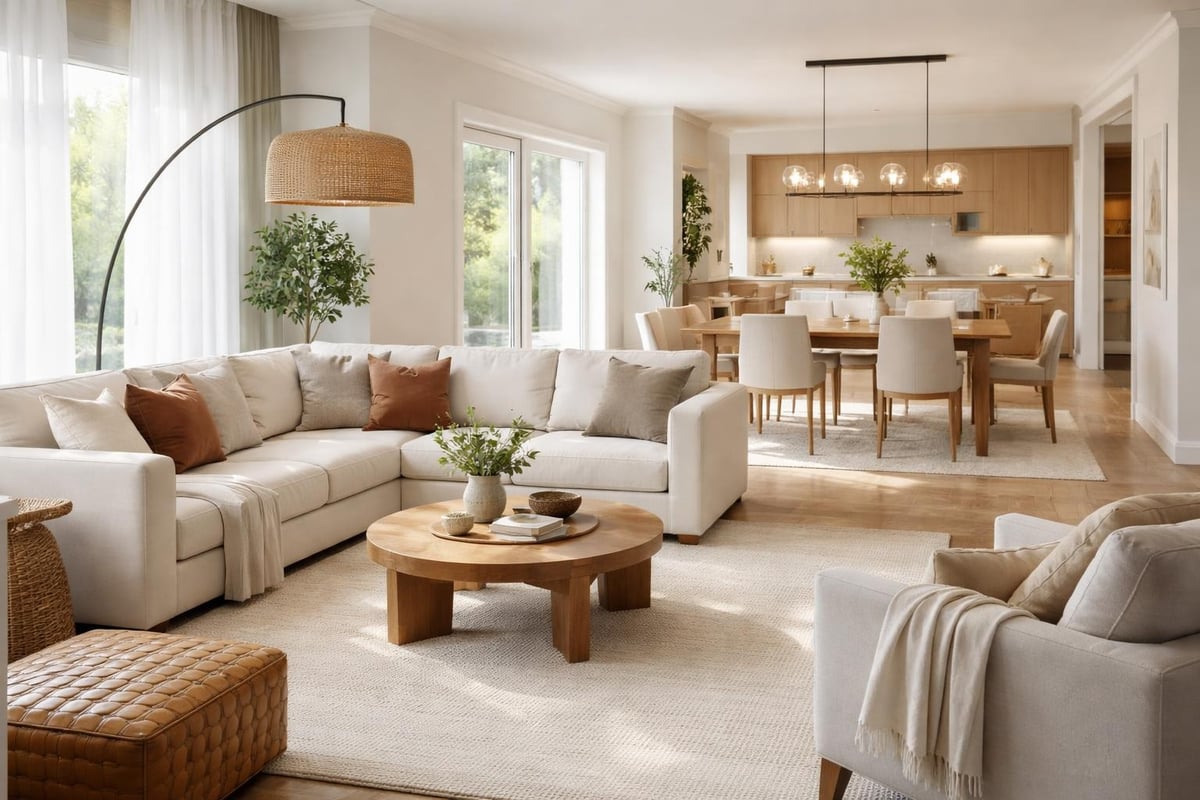
The shift towards open-plan living has created new opportunities for creative furniture placement and zoning. Rather than viewing the living spaces dining room as isolated from other areas, successful designs embrace visual connections whilst maintaining distinct purposes for each zone.
Architectural Considerations for Connected Spaces
When your dining area forms part of a larger living space, architectural elements become crucial for definition. Natural light sources, ceiling features, flooring transitions, and built-in storage all contribute to establishing boundaries without creating physical barriers.
Consider how sightlines work throughout your space. From the dining table, what views do you want to preserve? How does the dining area appear from the living room or kitchen? These visual relationships influence furniture selection, colour choices, and decorative decisions.
Essential Furniture for Your Living Spaces Dining Room
Selecting the right furniture pieces transforms a functional dining area into a cohesive, inviting space that complements your broader interior scheme.
Choosing the Perfect Dining Table
The dining table anchors the entire room, setting the tone for everything that follows. Size, shape, material, and style all require careful consideration based on your available space and lifestyle needs.
| Table Shape | Best For | Typical Capacity |
|---|---|---|
| Rectangular | Formal dining, narrow rooms | 6-10 people |
| Round | Conversation, smaller spaces | 4-6 people |
| Square | Balanced, symmetrical layouts | 4-8 people |
| Oval | Softening linear spaces | 6-8 people |
Material selection impacts both aesthetics and practicality. Solid wood tables bring warmth and character, whilst statement-making dining tables featuring mixed materials like metal frames with stone or glass tops create contemporary focal points.
The Noble & Nook dining room furniture collection showcases pieces designed to anchor your space with timeless elegance whilst offering the durability required for daily family life.
Selecting Complementary Seating
Dining chairs dramatically influence comfort and visual impact. The trend towards mixed materials and eclectic seating allows for creative combinations that add personality whilst maintaining cohesion.
Popular seating approaches for 2026:
- Matching sets for formal, traditional schemes
- Mix-and-match chairs in complementary styles
- Upholstered end chairs paired with simpler side chairs
- Bench seating for casual, family-friendly layouts
Upholstery choices affect maintenance and longevity. Leather and performance fabrics suit busy households, whilst velvet or linen bring luxurious texture to more formal settings.
Storage Solutions That Enhance Functionality
Practical storage maintains order in multifunctional dining spaces. Sideboards offer generous capacity for tableware, linens, and serving pieces whilst providing valuable surface area for displays, lighting, and decorative accessories.
Statement storage has emerged as a significant design trend, with pieces selected not merely for function but as architectural features that contribute to the room's character. Quality craftsmanship, refined finishes, and considered proportions ensure these pieces enhance rather than overwhelm your living spaces dining room.
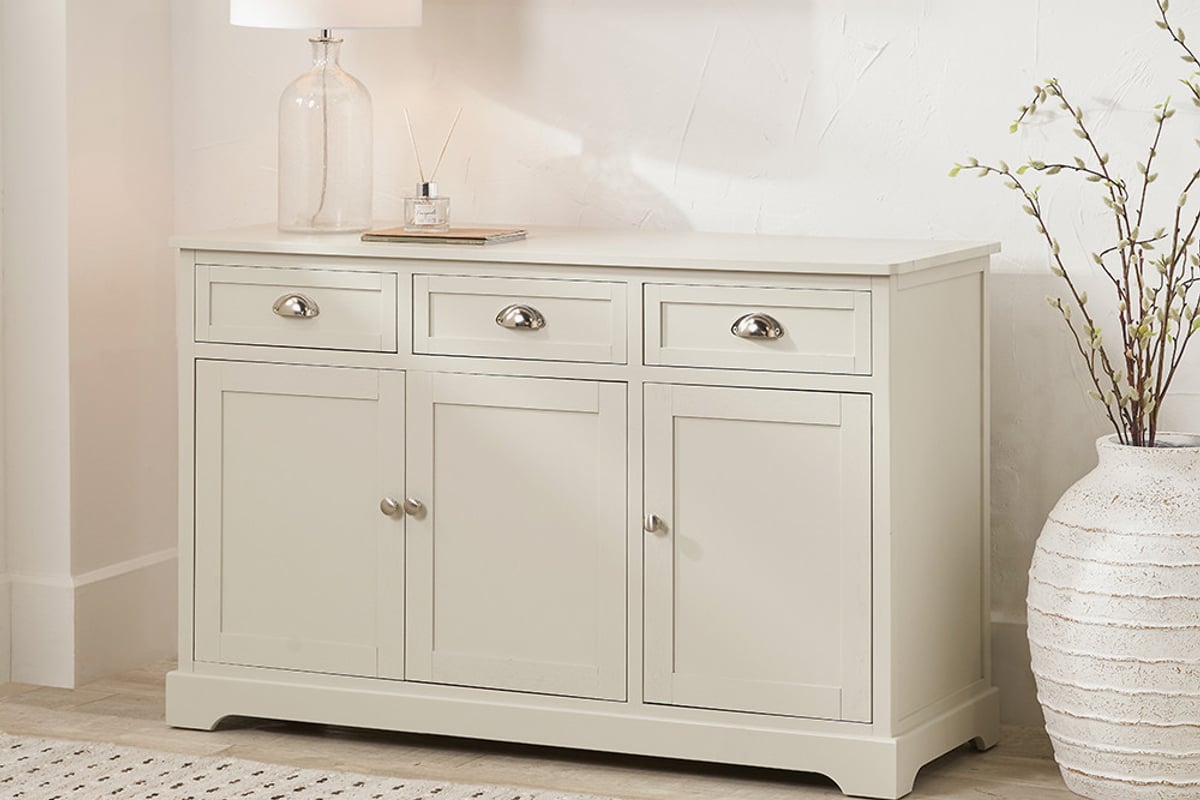
Alternative storage options include display cabinets that showcase collections whilst keeping items dust-free, and console tables that provide surface space without the visual weight of deeper furniture pieces.
Creating Visual Harmony in Open-Plan Layouts
When your dining area connects to living spaces, achieving visual continuity whilst maintaining distinct zones requires strategic design decisions.
Colour Schemes That Connect Spaces
Colour creates both unity and definition. A cohesive palette that flows throughout connected areas establishes harmony, whilst accent colours can subtly distinguish different zones.
Effective colour strategies include:
- Using a consistent neutral base throughout all spaces
- Introducing dining-specific accent colours through upholstery and accessories
- Repeating key colours in different proportions across zones
- Employing deeper tones in the dining area to create intimacy
Bold, moody colour palettes have gained traction according to 2025 dining room trends, with rich jewel tones and sophisticated dark hues creating dramatic, cocooning environments perfect for evening entertaining.
Flooring and Rugs as Zone Definers
Flooring transitions provide subtle boundaries between living and dining areas. Where continuous flooring runs throughout, area rugs become essential for defining the dining zone.
A properly sized rug should extend beyond all chairs when pulled out, typically requiring dimensions at least 60-90cm larger than the table on all sides. This practical consideration prevents chair legs catching on rug edges whilst visually anchoring the dining arrangement.
Material selection balances aesthetics with practicality. Natural fibres like jute or sisal suit casual schemes but require careful maintenance. Wool rugs offer durability and soil resistance, whilst synthetic options provide budget-friendly resilience in high-traffic areas.
Lighting Your Living Spaces Dining Room
Lighting serves both functional and atmospheric purposes, with layered schemes offering flexibility for different activities and moods.
Statement Pendant Lighting
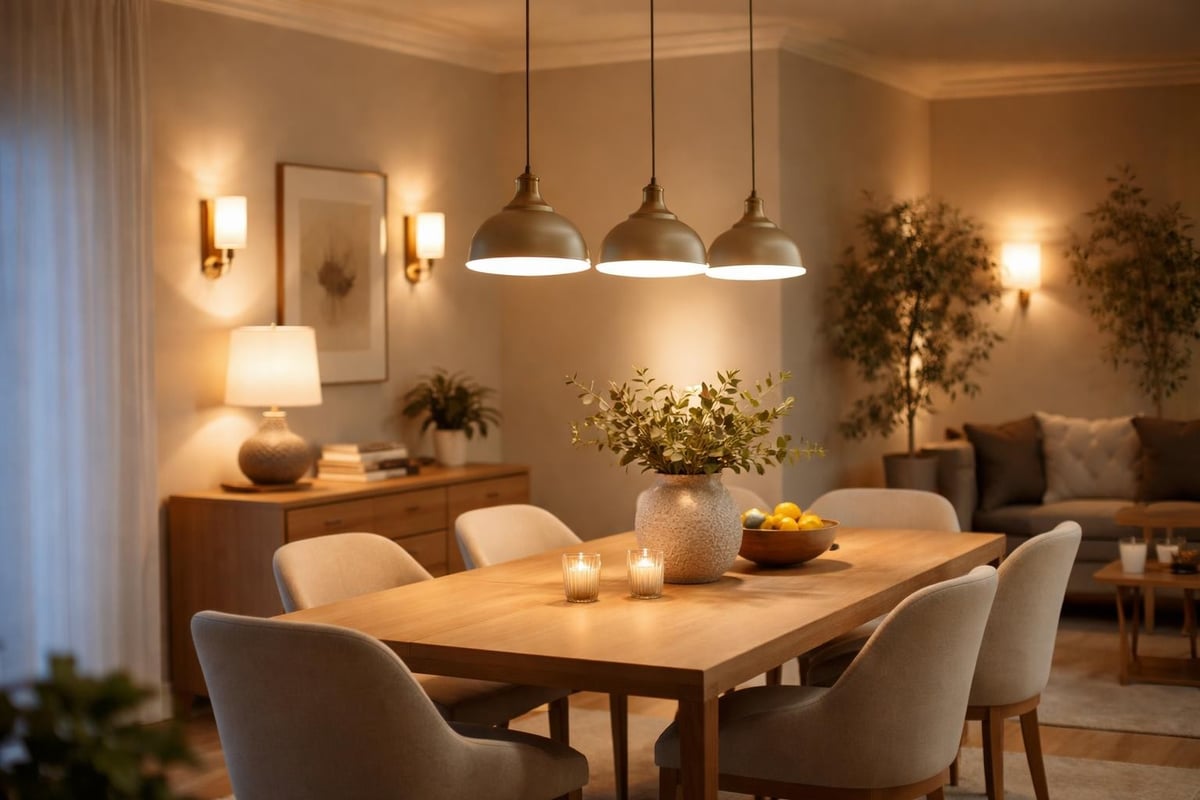
A striking pendant or chandelier above the dining table creates a focal point whilst providing essential task lighting. Scale matters enormously-fixtures should be proportionate to both table size and ceiling height.
Pendant lighting guidelines:
- Hang 75-85cm above the table surface
- Choose fixtures approximately one-half to two-thirds the table width
- Install dimmers for atmosphere control
- Consider multiple pendants for long tables
The trend towards statement lighting has elevated these fixtures from purely functional elements to sculptural artworks that define the room's character.
Ambient and Accent Lighting Layers
Beyond central fixtures, additional lighting layers add depth and flexibility. Wall sconces provide gentle ambient light without consuming table or floor space. Picture lights highlight artwork, whilst recessed lighting offers unobtrusive general illumination.
In open-plan living spaces dining room layouts, coordinated lighting across zones maintains visual flow. Fixtures needn't match exactly, but should share common elements-finish, style, or scale-that create cohesion.
Decorative Elements and Personal Touches
Whilst furniture and lighting establish the foundation, decorative accessories inject personality and warmth into your living spaces dining room.
Wall Art and Mirror Placement
Artwork scaled appropriately for the wall size creates impact without overwhelming the space. Mixed metals in dining rooms demonstrate how frames in various finishes can work harmoniously when united by subject matter or colour palette.
Mirrors amplify natural light and create the illusion of expanded space. Position mirrors to reflect appealing views or dining table arrangements rather than windows that create glare.
Textile Layering for Warmth
Table linens, chair cushions, and window treatments soften hard surfaces whilst introducing texture and colour. The tactile experience of quality fabrics enhances the sensory pleasure of dining.
Textile considerations for dining spaces:
- Washable table linens for practical everyday use
- Performance fabrics on dining chairs for stain resistance
- Layered window treatments for light and privacy control
- Seasonal updates through cushions and throws
Natural materials and tactile textures feature prominently in current design thinking, with linen, cotton, and wool preferred for their sustainable credentials and authentic character.
Styling Trends for 2026
Contemporary design celebrates individuality and personal expression, moving beyond matchy-matchy schemes towards curated, collected interiors.
The Eclectic Approach to Furniture Mixing
Living room furniture trends for 2026 emphasise mixing various furniture styles to create personalised spaces that reflect individual taste rather than showroom perfection. This principle applies equally to dining areas.
Successful eclectic schemes maintain cohesion through:
- Consistent colour undertones across different pieces
- Repeated materials or finishes
- Similar proportions and scale
- Unified styling approach in accessories
Revival Styles Making Returns
Period influences continue to inspire contemporary interpretations. The Rococo revival trend showcases lavish details, curved forms, and ornate embellishments adapted for modern living.
These historical references work best when balanced with contemporary elements, preventing spaces from feeling costume-like or museum-styled. A gilded antique mirror might hang above a sleek modern sideboard, or carved traditional chairs surround a minimalist table.
Practical Considerations for Daily Living
Beautiful design must accommodate real life, especially in spaces serving multiple purposes throughout the day.
Family-Friendly Material Choices
Households with children require furniture and finishes that withstand daily wear whilst remaining attractive. Sealed wood surfaces, stain-resistant upholstery, and washable area rugs make practical sense without sacrificing style.
Durable material options:
| Material | Benefits | Considerations |
|---|---|---|
| Sealed hardwood | Beautiful, long-lasting, repairable | Requires periodic maintenance |
| Performance fabric | Stain-resistant, easy cleaning | Limited texture variation |
| Laminate tops | Extremely durable, budget-friendly | Less authentic appearance |
| Sintered stone | Heat and stain resistant, luxurious | Higher investment |
For detailed information on advanced materials, explore what sintered stone offers in terms of durability and aesthetic appeal.
Maximising Small Dining Spaces
Limited square footage needn't compromise dining room functionality or style. Thoughtful furniture selection and clever spatial planning make even compact areas feel generous and welcoming.
Discover specific strategies in this guide to transforming small dining rooms, which covers space-saving furniture, visual tricks, and layout optimisation for restricted areas.
Extension tables, folding chairs stored elsewhere, and wall-mounted drop-leaf solutions provide flexibility for occasional entertaining without permanent space sacrifice. Mirrors strategically placed amplify both light and perceived dimensions.
Seasonal Updates and Refreshes
Your living spaces dining room can evolve throughout the year without requiring complete redesigns or significant investment.
Simple Styling Switches
Seasonal changes through textiles, tableware, and decorative accessories keep spaces feeling fresh and current. Autumn might bring richer colours and heavier textures, whilst spring welcomes lighter palettes and natural materials.
Low-effort, high-impact updates:
- Swapping cushion covers and table runners
- Rotating artwork or photographs
- Changing lighting with different bulb temperatures
- Introducing seasonal greenery or floral arrangements
- Updating place settings and serving pieces
These minor adjustments maintain visual interest whilst respecting your established design foundation and furniture investment.
Maintaining Quality Furniture
Proper care extends the lifespan of quality pieces, protecting your investment whilst preserving beauty. Different materials require specific maintenance approaches.
Wood furniture benefits from regular dusting, periodic conditioning with appropriate products, and protection from direct sunlight that causes fading. Upholstered pieces need vacuuming to remove dust and debris, with professional cleaning addressing deeper soiling. Metal finishes maintain their lustre with gentle cleaning using appropriate solutions that won't damage protective coatings.
Integrating Technology Thoughtfully
Modern living demands connectivity, yet visible cables and devices can disrupt carefully considered aesthetics.
Discrete Charging Solutions
Built-in charging stations within sideboards or console tables provide convenient device access whilst maintaining visual order. Wireless charging pads embedded in furniture surfaces offer seamless functionality without cluttering tabletops.
Cable management systems concealed within furniture or architectural details prevent the visual chaos of tangled wires. These practical considerations prove especially important in multifunctional dining spaces that serve as workstations during daytime hours.
Smart Home Integration
Automated lighting, motorised blinds, and climate control enhance comfort and convenience. Voice-activated systems allow hands-free adjustments during meal preparation or entertaining, whilst programmed scenes create appropriate atmospheres for different occasions.
The key to successful technology integration lies in invisibility-systems should enhance rather than dominate the space, with controls and devices carefully concealed or selected for aesthetic compatibility with your design scheme.
Bringing Together Living and Dining Spaces
Successfully designed living spaces dining room areas achieve balance between connection and distinction, creating environments that flow naturally whilst serving specific purposes.
The furniture pieces you select, from substantial dining tables to thoughtfully chosen side tables, establish the foundation upon which all other design decisions build. Quality craftsmanship ensures longevity, whilst timeless styling prevents rapid obsolescence as trends shift.
Colour, lighting, texture, and accessories layer personality and warmth onto this foundation, transforming functional spaces into homes that reflect individual taste and accommodate real life. Whether your style leans towards traditional elegance, contemporary minimalism, or eclectic maximalism, the principles of proportion, balance, and cohesion remain constant.
By approaching your living spaces dining room as both a distinct zone and an integrated part of your broader home, you create flexible, beautiful spaces that serve multiple purposes whilst maintaining visual harmony throughout connected areas.
Creating a beautiful, functional living spaces dining room requires balancing aesthetics with practicality, selecting quality pieces that serve your lifestyle whilst reflecting your personal style. At Noble & Nook, we curate boutique furniture and luxury lighting designed to elevate every room, offering the quality craftsmanship and timeless design that transforms houses into homes. With free UK mainland delivery and flexible payment options through Klarna or PayPal, bringing your dining room vision to life has never been more accessible.