

Farmhouse decor for dining room spaces continues to captivate homeowners across the United Kingdom, offering a perfect balance between rustic charm and contemporary comfort. This enduring style celebrates natural materials, handcrafted details, and a lived-in warmth that transforms dining areas into inviting gathering spots for family and friends. Whether you're working with a compact city flat or a spacious country home, farmhouse aesthetics provide versatile design solutions that feel both timeless and effortlessly stylish.
Understanding the Farmhouse Dining Room Aesthetic
The farmhouse style draws inspiration from traditional agricultural dwellings, where functionality and durability took precedence over ornate decoration. This practical foundation creates spaces that feel authentic rather than contrived.
At its core, farmhouse decor for dining room settings prioritises natural materials such as solid wood, linen, cotton, and wrought iron. These elements work together to establish a connection with nature whilst maintaining a refined sensibility appropriate for modern British interiors.
Key Characteristics That Define the Look
- Weathered wood finishes with visible grain patterns
- Neutral colour palettes anchored by whites, creams, and warm greys
- Mix of vintage and contemporary furnishings
- Textural variety through fabrics, metals, and organic materials
- Open shelving or glass-fronted storage displaying everyday items
The beauty of this aesthetic lies in its adaptability. According to Pinterest's summer trend forecasts, rustic farmhouse continues to dominate interior design preferences, particularly for those seeking approachable, easy-to-live-with spaces.
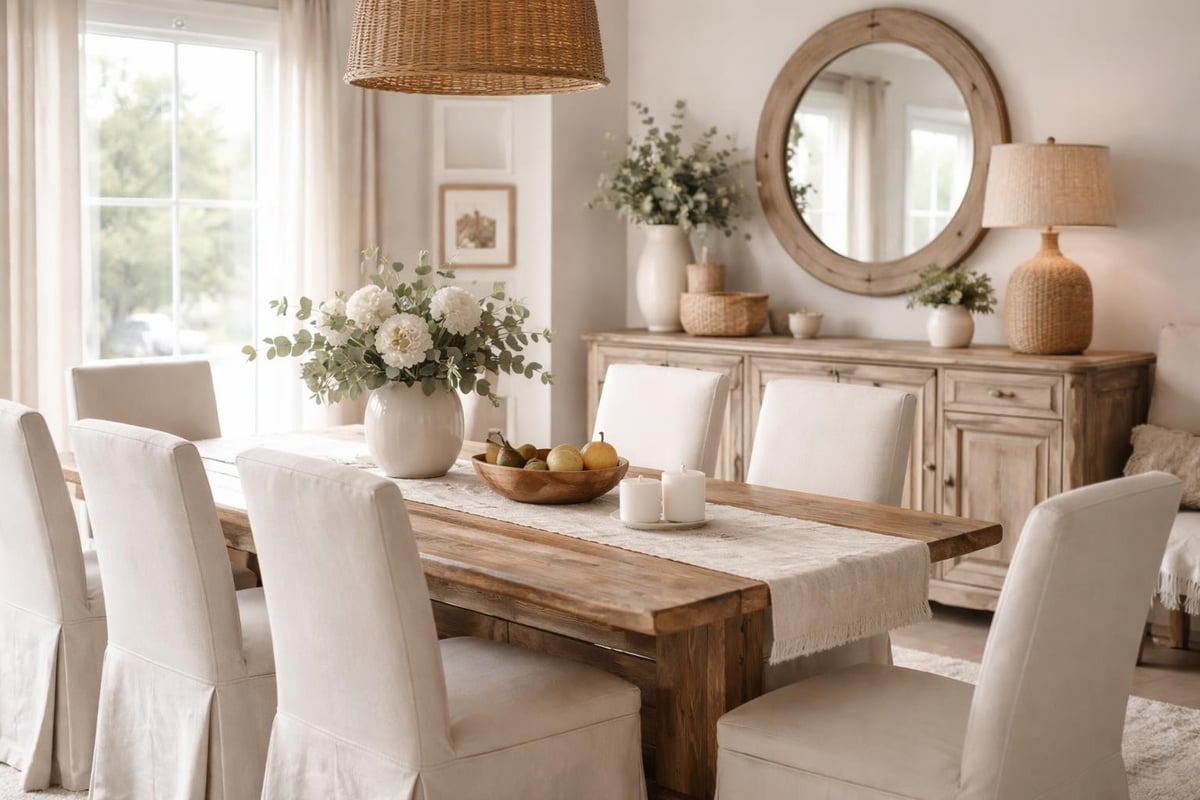
Selecting the Perfect Dining Table
Your dining table serves as the anchor piece for farmhouse decor for dining room spaces. This investment warrants careful consideration, as it sets the tone for the entire room.
Material and Finish Considerations
Solid wood tables remain the quintessential choice, offering durability and character that improves with age. Oak, pine, and reclaimed timber each bring distinct qualities to your space.
| Wood Type | Characteristics | Best For |
|---|---|---|
| Oak | Durable, prominent grain, ages beautifully | High-traffic family dining |
| Pine | Softer wood, lighter tone, rustic appeal | Casual, cottage-style rooms |
| Reclaimed timber | Unique patina, sustainable, storied texture | Statement pieces, eco-conscious homes |
| Walnut | Rich dark tones, sophisticated grain | Contemporary farmhouse looks |
The finish matters considerably. Distressed or lime-washed surfaces enhance the vintage quality, whilst natural oil finishes celebrate the wood's inherent beauty. For those seeking inspiration, explore dining room furniture collections that showcase various approaches to farmhouse styling.
Size and Shape Selection
Consider your room proportions carefully. Rectangular tables suit longer, narrower spaces, whilst round or square options work brilliantly in compact areas. Small dining room ideas demonstrate how thoughtful furniture selection maximises functionality without compromising style.
For families who regularly entertain, extendable tables offer flexibility. Look for designs with leaf inserts or drop-leaf mechanisms that maintain visual cohesion when expanded.
Seating Solutions That Balance Comfort and Style
Farmhouse dining chairs should marry practicality with aesthetic appeal. The most successful schemes embrace variety rather than rigid uniformity.
Mixing Chair Styles
Create visual interest by combining different seating types around your table. Pair traditional Windsor-style chairs with upholstered dining chairs, or introduce a bench along one side to encourage casual family meals.
This approach, championed by designers like Erin Napier in her farmhouse dining rooms, adds personality whilst maintaining cohesion through consistent colour or material choices.
Fabric and Finish Choices
- Natural linen in neutral tones for timeless elegance
- Woven rush or cane seats for authentic farmhouse character
- Distressed painted finishes in soft whites or sage greens
- Leather or faux leather for durability and easy maintenance
The Brockham Taupe Dining Chair exemplifies how contemporary comfort integrates seamlessly with farmhouse aesthetics through thoughtful material selection and refined proportions.
Layering Textures and Textiles
Successful farmhouse decor for dining room spaces relies heavily on textural variety. This layering creates depth and prevents the neutral palette from feeling flat or sterile.
Table Linens and Runners
Begin with quality table linens that protect surfaces whilst introducing pattern or colour. Striped cotton runners, checked tablecloths, or simple linen placemats each contribute to the relaxed farmhouse sensibility.
For everyday use, opt for washable, forgiving fabrics that maintain their appearance despite regular laundering. Reserve more delicate pieces for special occasions.
Window Treatments
Natural light plays a crucial role in farmhouse interiors. Window treatments should filter rather than block this essential element.
Consider these options:
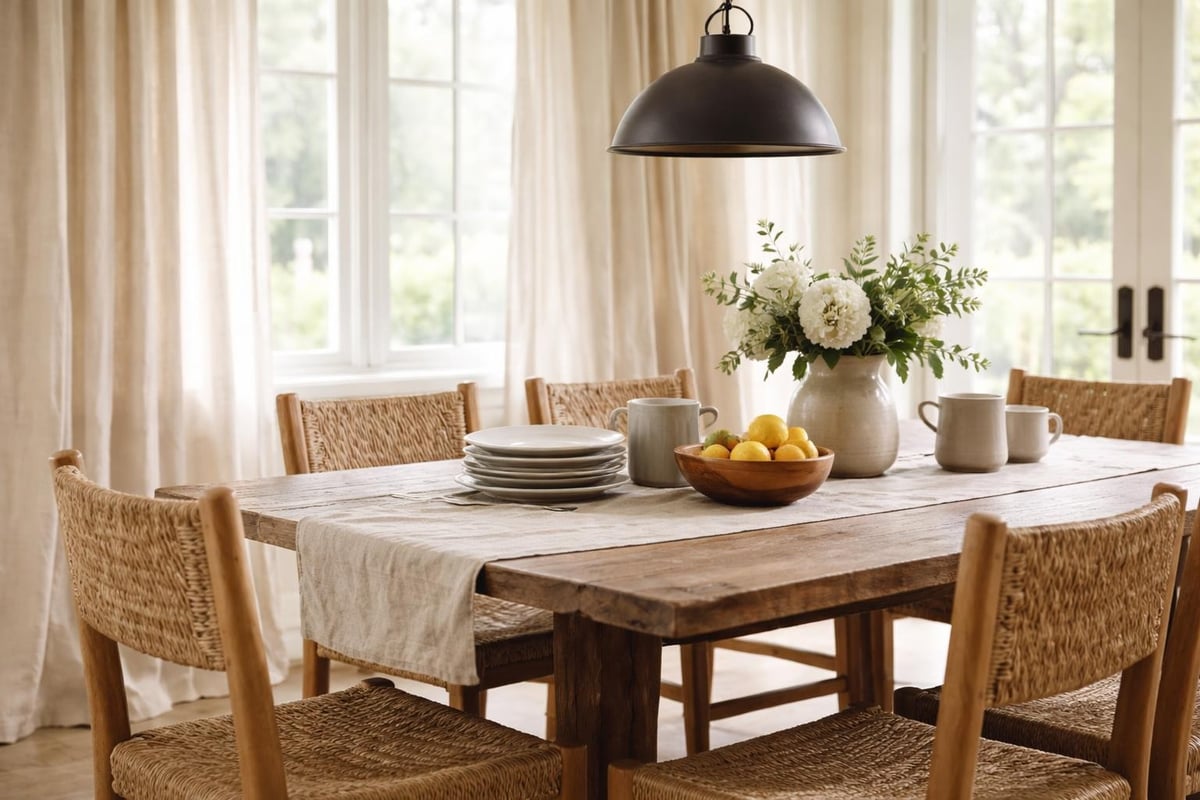
- Unlined linen curtains that diffuse sunlight beautifully
- Simple wooden blinds with visible grain patterns
- Sheer cotton voiles layered with heavier drapes
- Classic café curtains for cottage-style charm
Lighting That Sets the Mood
Appropriate lighting transforms functional dining areas into atmospheric gathering spaces. Farmhouse decor for dining room settings traditionally favours statement fixtures with artisanal qualities.
Pendant and Chandelier Options
Position your primary light source centrally above the dining table, ensuring the fixture's scale suits the room proportions. A general rule suggests the diameter should measure approximately half to two-thirds of the table width.
Wrought iron chandeliers, wooden bead pendants, and metal cage lights all complement farmhouse aesthetics beautifully. For rooms with lower ceilings, flush or semi-flush mounts prevent overwhelming the space.
Layered Lighting Approach
Beyond overhead fixtures, incorporate multiple light sources:
- Wall sconces flanking a sideboard or buffet
- Table lamps on console tables or sideboards
- Candles in hurricane lanterns or simple holders
- Natural light maximised through strategic furniture placement
This layered approach ensures functionality during meals whilst creating ambience for evening entertaining. The expertise in luxury lighting collections demonstrates how quality fixtures elevate everyday spaces.
Storage and Display Furniture
Practical storage solutions maintain the uncluttered aesthetic essential to farmhouse design whilst providing necessary functionality for dining essentials.
Sideboards and Buffets
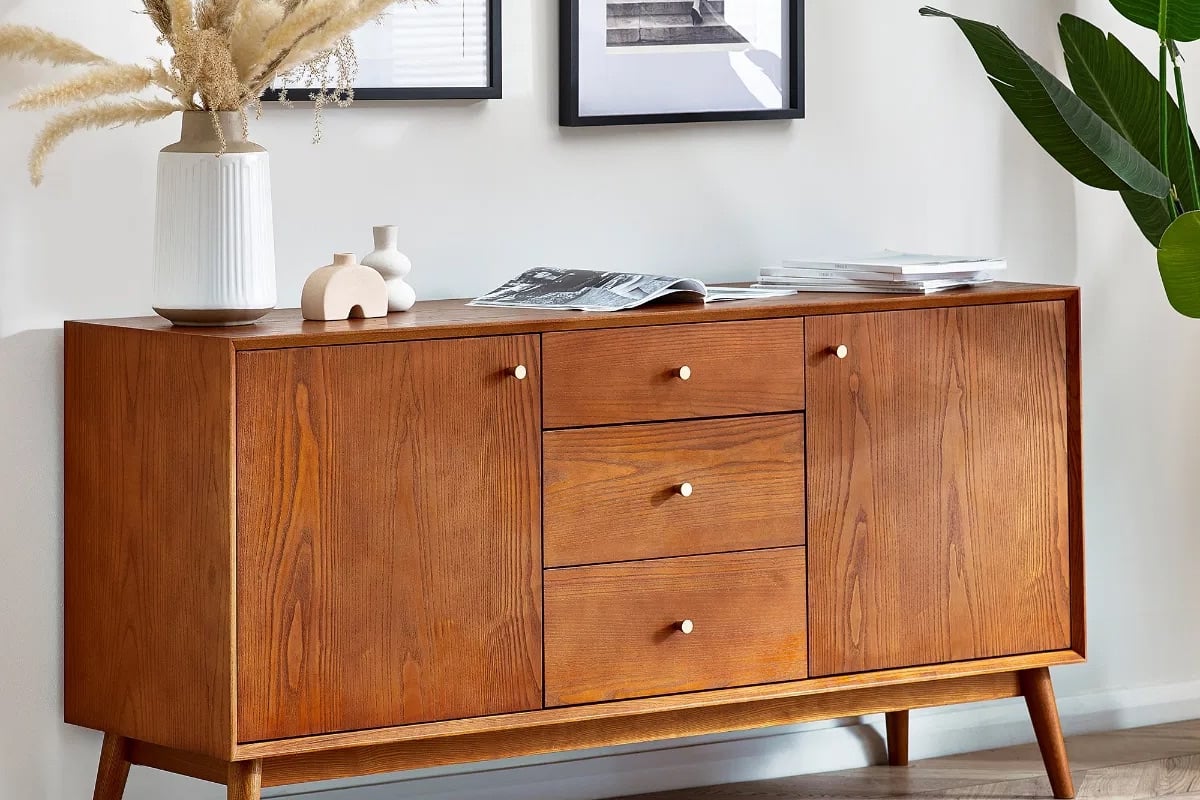
A well-chosen sideboard serves multiple purposes in farmhouse dining rooms. It offers concealed storage for linens, serving pieces, and tableware whilst providing a surface for display and serving during gatherings. Sideboards combine generous storage with timeless elegance, featuring quality materials and refined finishes suited to both modern and traditional British interiors.
Position your sideboard against the longest wall, ensuring adequate clearance for chair movement. Style the surface with ceramic vessels, wooden trays, vintage books, or seasonal greenery to maintain visual interest without clutter.
Open Shelving and Dressers
Traditional farmhouse dressers with open upper shelves and closed lower cabinets offer charming display opportunities. Arrange everyday items-white ironstone, vintage glassware, woven baskets-in casual groupings that feel collected rather than curated.
This practical storage approach keeps frequently used items accessible whilst contributing to the room's overall aesthetic. Balance open and closed storage to prevent visual overwhelm.
Wall Decor and Artwork
Farmhouse walls should feel intentional yet relaxed, avoiding the stiff formality of overly coordinated schemes. The modern farmhouse dining room approach emphasises layered, eclectic selections that build character over time.
Artwork Selection
Choose pieces that reinforce the natural, pastoral themes central to farmhouse aesthetics:
- Botanical prints and vintage seed packet reproductions
- Black and white photography of rural landscapes
- Simple line drawings with agricultural motifs
- Abstract pieces in muted, earthy tones
Explore wall art collections featuring nature-inspired illustrations and refined neutral palettes suitable for both modern and traditional interiors.
Mirrors and Functional Decor
Large mirrors amplify natural light whilst visually expanding smaller dining rooms. Position mirrors opposite windows to maximise this effect. Weathered wood frames, simple metal surrounds, or vintage-inspired designs maintain cohesion with farmhouse principles.
Functional items such as wall-mounted plate racks, vintage clocks, or floating shelves blur the line between decoration and utility-a hallmark of authentic farmhouse design.
Colour Palette and Paint Choices
Farmhouse decor for dining room spaces traditionally embraces soft, organic colour schemes that create calm, welcoming environments. This restraint allows architectural details and textural elements to take centre stage.
Foundational Neutrals
Build your palette around these timeless choices:
| Colour Category | Specific Shades | Application |
|---|---|---|
| Whites | Warm ivory, clotted cream, soft chalk | Walls, ceiling, woodwork |
| Greys | Greige, dove grey, warm stone | Accent walls, furniture |
| Earth tones | Taupe, beige, soft brown | Textiles, accessories |
| Muted greens | Sage, moss, eucalyptus | Feature walls, painted furniture |
These foundations create a versatile backdrop for seasonal adjustments and evolving personal style.
Accent Colour Integration
Introduce depth through carefully selected accent colours. Deep navy, charcoal, terracotta, or muted mustard add visual weight without overwhelming the space. Apply these sparingly through textiles, artwork, or painted furniture pieces.
Consider the room's natural light when selecting paint colours. North-facing rooms benefit from warmer undertones, whilst south-facing spaces can accommodate cooler greys and whites.
Seasonal Styling and Flexibility
The adaptability of farmhouse aesthetics allows seamless seasonal transitions through simple styling adjustments. This flexibility ensures your dining room remains fresh throughout the year.
Spring and Summer Updates
- Replace heavy fabrics with lightweight linen and cotton
- Introduce fresh flowers and potted herbs as centrepieces
- Swap darker accent colours for soft blues, pale yellows, or mint greens
- Open curtains fully to maximise natural light
Autumn and Winter Warmth
- Layer warmer textiles such as wool throws and velvet cushions
- Incorporate dried grasses, wheat sheaves, or pine cones in displays
- Add candles and lanterns for ambient evening lighting
- Introduce richer accent tones through table linens and artwork
These seasonal adjustments require minimal investment whilst keeping your space feeling current and thoughtfully maintained.
Creating Focal Points and Visual Interest
Every successful room design requires deliberate focal points that anchor the eye and establish visual hierarchy. In dining rooms, these typically centre around the table itself, but supporting elements enhance overall impact.
Statement Lighting as a Centrepiece
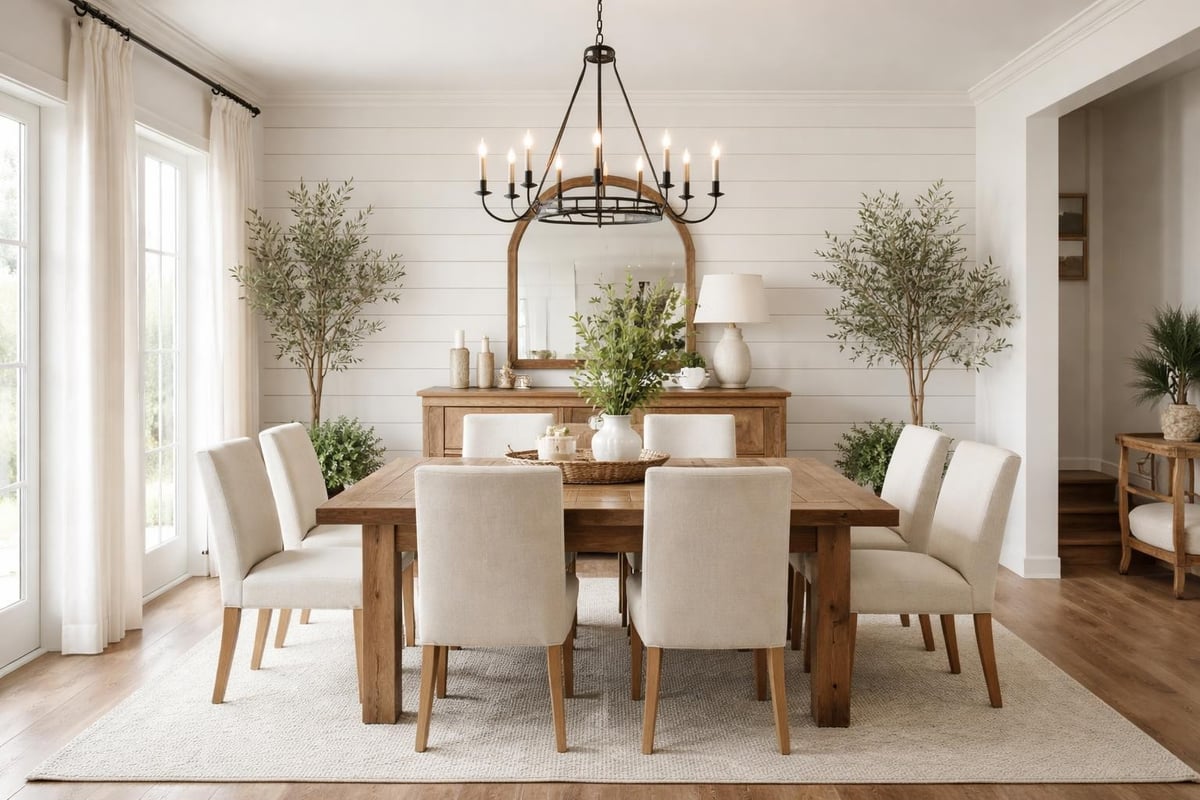
Your overhead fixture naturally draws attention. Select a piece with presence-whether an oversized iron chandelier, a rustic wooden beam pendant, or a cluster of industrial-style lights-that reinforces your farmhouse vision whilst providing adequate illumination.
Feature Walls and Architectural Details
Enhance plain walls through techniques that add character:
- Shiplap or tongue-and-groove panelling painted in soft whites
- Exposed brick sealed and left natural or lime-washed
- Picture rail moulding to display rotating artwork
- Vintage wallpaper in subtle patterns restricted to a single wall
These architectural interventions create depth and interest without overwhelming the space. For guidance on balancing multiple elements, essential furniture styling techniques offer practical frameworks.
Incorporating Vintage and Antique Elements
Authentic farmhouse decor for dining room spaces benefits enormously from curated vintage pieces that introduce history and character. These elements prevent the aesthetic from feeling manufactured or overly styled.
Sourcing Genuine Pieces
Explore local antique markets, salvage yards, and online marketplaces for items with genuine patina. Look for:
- Vintage enamelware and ironstone for display
- Antique wooden crates or boxes for storage
- Reclaimed architectural elements such as corbels or brackets
- Original farmhouse tools repurposed as wall art
Quality vintage pieces often represent excellent value, offering superior craftsmanship and materials compared to mass-produced alternatives.
Balancing Old and New
Successful integration requires restraint. Limit vintage items to one or two statement pieces per room, supplemented by contemporary furnishings that reference traditional forms. This approach, explored in European-inspired dining room makeovers, creates timeless rather than theme-driven spaces.
Practical Considerations for British Homes
Adapting farmhouse principles to British properties requires acknowledging architectural realities such as smaller room proportions, period features, and variable natural light.
Working with Compact Spaces
Many British dining rooms occupy modest footprints. Maximising small dining spaces through strategic furniture selection and clever storage solutions ensures functionality without aesthetic compromise.
Choose round or oval tables over rectangular ones to improve circulation. Consider bench seating along walls to maximise capacity whilst maintaining clear pathways.
Respecting Period Architecture
Period properties with original features benefit from sympathetic farmhouse treatments that enhance rather than conceal architectural character. Retain ceiling roses, cornicing, picture rails, and original fireplaces, allowing these elements to anchor your farmhouse scheme.
Paint woodwork in period-appropriate colours-off-whites, soft greys, gentle greens-that complement rather than compete with farmhouse furnishings.
The Role of Natural Elements
Bringing the outdoors inside remains central to farmhouse philosophy. Natural elements soften hard surfaces, purify air, and create visual connections with the surrounding landscape.
Living Greenery
Incorporate plants through various means:
- Potted herbs on windowsills for practical beauty
- Trailing ivy or pothos in hanging planters
- Seasonal cut flowers in simple vessels
- Potted trees such as olive or fig in larger rooms
Select containers that reinforce your aesthetic-terracotta pots, galvanised metal buckets, white ceramic planters, or woven baskets-rather than plastic alternatives.
Organic Materials and Finishes
Beyond plants, introduce natural materials through:
- Woven seagrass or jute rugs beneath the table
- Wooden serving boards and bowls as decorative objects
- Stone or ceramic vessels for display
- Fresh or dried botanicals as centrepieces
These elements reinforce the farmhouse connection to agricultural traditions whilst adding textural richness to contemporary interiors.
Finishing Touches That Complete the Look
The distinction between ordinary and exceptional farmhouse decor for dining room settings often lies in thoughtful finishing details. These considered touches demonstrate intentionality and personal style.
Hardware and Fixtures
Replace standard door handles, curtain poles, and cabinet hardware with options that complement farmhouse aesthetics. Wrought iron, aged brass, matte black metal, and simple wooden knobs each reinforce the style whilst offering tactile quality.
Table Styling Essentials
Maintain a curated selection of everyday table items that balance practicality with visual appeal:
| Item | Material | Purpose |
|---|---|---|
| Placemats | Linen, woven rattan | Surface protection, texture |
| Napkins | Cotton, linen | Functionality, colour accent |
| Napkin rings | Wood, leather, metal | Detail, organisation |
| Serving pieces | Ironstone, wood, enamel | Display, functionality |
These elements allow quick transitions from everyday family meals to more formal entertaining whilst maintaining cohesive farmhouse styling throughout.
Personal Collections and Meaningful Objects
The most successful farmhouse spaces incorporate personal collections that tell stories. Whether vintage pottery, family heirlooms, travel souvenirs, or handmade ceramics, these objects inject personality and prevent the aesthetic from feeling generic.
Display collections thoughtfully, grouping similar items together for impact rather than scattering them randomly. Rotate displays seasonally to maintain visual freshness.
Maintenance and Longevity
Farmhouse decor for dining room applications should improve with age, developing patina and character through regular use. This requires selecting quality materials and maintaining them appropriately.
Caring for Natural Materials
Wood furniture benefits from regular dusting and occasional treatment with appropriate oils or waxes. Avoid harsh chemical cleaners that strip protective finishes.
Natural textiles require gentle laundering in cool water with mild detergents. Line-dry when possible to preserve fibres and reduce environmental impact.
Metal fixtures develop attractive patina naturally. If you prefer maintained finishes, clean with appropriate metal polishes suited to the specific material.
Evolving Your Space
Farmhouse aesthetics welcome gradual evolution rather than wholesale redesigns. As your needs and preferences shift, make incremental adjustments through accessory updates, furniture repositioning, or minor paint refreshes.
This organic approach to interior development aligns perfectly with farmhouse principles of sustainability, practicality, and respect for quality craftsmanship. The comprehensive farmhouse dining room furniture guide explores how thoughtful furniture selection and layout planning create enduring spaces.
Creating a beautiful farmhouse dining room combines thoughtful furniture selection, carefully layered textures, and personal touches that reflect your unique style whilst honouring timeless design principles. Whether you're refreshing a single element or undertaking a complete transformation, the versatility of farmhouse aesthetics ensures spaces that feel both welcoming and refined. Noble & Nook offers carefully curated collections of quality dining furniture, elegant lighting, and boutique home decor designed to elevate every room, with free UK mainland shipping and flexible payment options to make your farmhouse vision achievable.