

The dining room sofa table has emerged as one of the most versatile furniture pieces in contemporary British homes, offering a sophisticated solution for open-plan layouts and traditional dining spaces alike. This adaptable piece serves multiple purposes, from defining spatial boundaries to providing essential storage and display opportunities. Whether positioned behind a sofa to separate living and dining areas or placed against a wall to showcase decorative accessories, the dining room sofa table brings both practical functionality and visual elegance to your interior scheme.
Understanding the Dining Room Sofa Table's Dual Identity
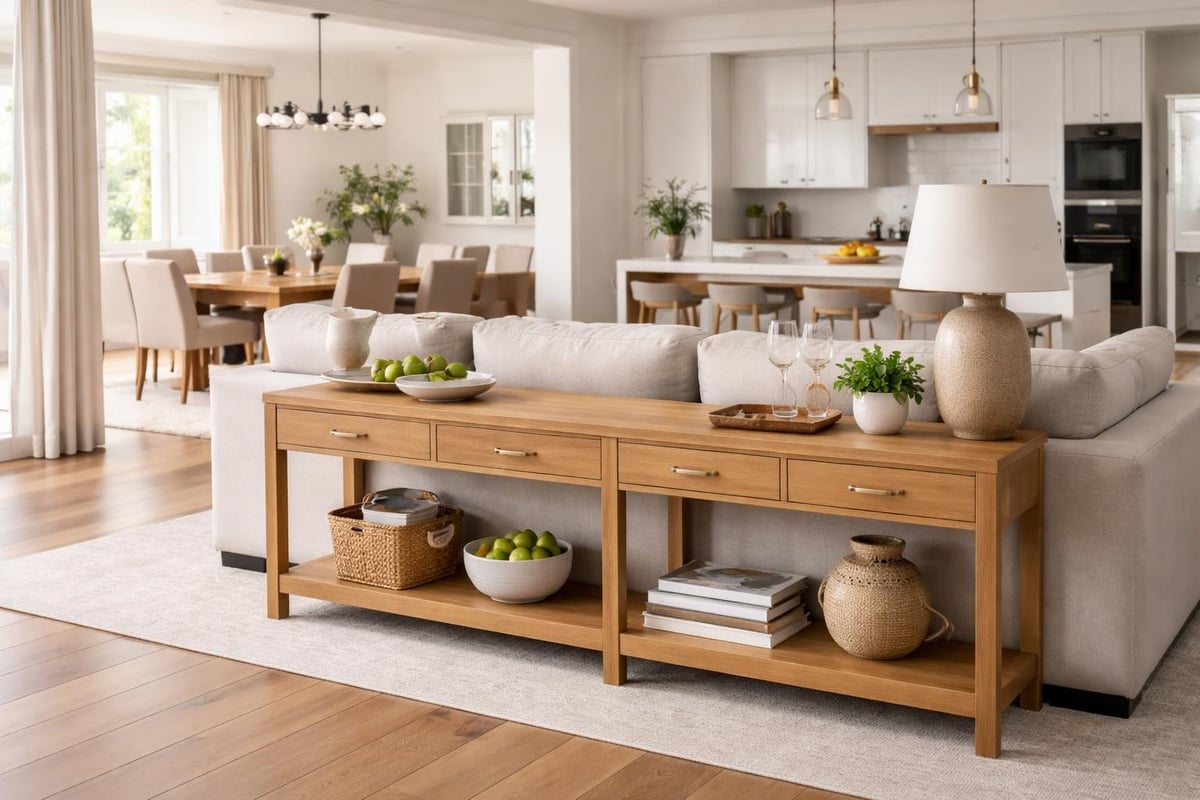
A dining room sofa table occupies a unique position in furniture design, bridging the gap between traditional console tables and multifunctional storage pieces. The term itself reflects the piece's versatility, suitable for placement behind sofas in open-plan spaces where dining and living zones merge seamlessly.
These tables typically measure between 76 and 91 centimetres in height, allowing them to align perfectly with standard sofa backs. This proportional relationship ensures visual harmony whilst maintaining practical accessibility. The depth usually ranges from 30 to 45 centimetres, providing sufficient surface area without encroaching on circulation space.
Where Form Meets Function
The beauty of a dining room sofa table lies in its ability to serve multiple roles simultaneously. In open-plan layouts, it acts as a subtle room divider, creating psychological separation between zones without blocking sightlines or natural light flow. This approach proves particularly effective in making small dining rooms appear more spacious whilst maintaining an airy, connected feel.
Key functional benefits include:
- Display surface for decorative objects, table lamps, and seasonal arrangements
- Storage solution with drawers or shelves for dining accessories, linens, or entertaining essentials
- Serving station during gatherings, holding drinks, appetizers, or buffet items
- Visual anchor that grounds furniture groupings and defines spatial boundaries
Choosing Materials and Finishes for Your Space
Material selection significantly impacts both the aesthetic contribution and practical performance of your dining room sofa table. Each option brings distinct characteristics that should align with your existing décor scheme and lifestyle requirements.
Wood: Timeless Warmth and Character
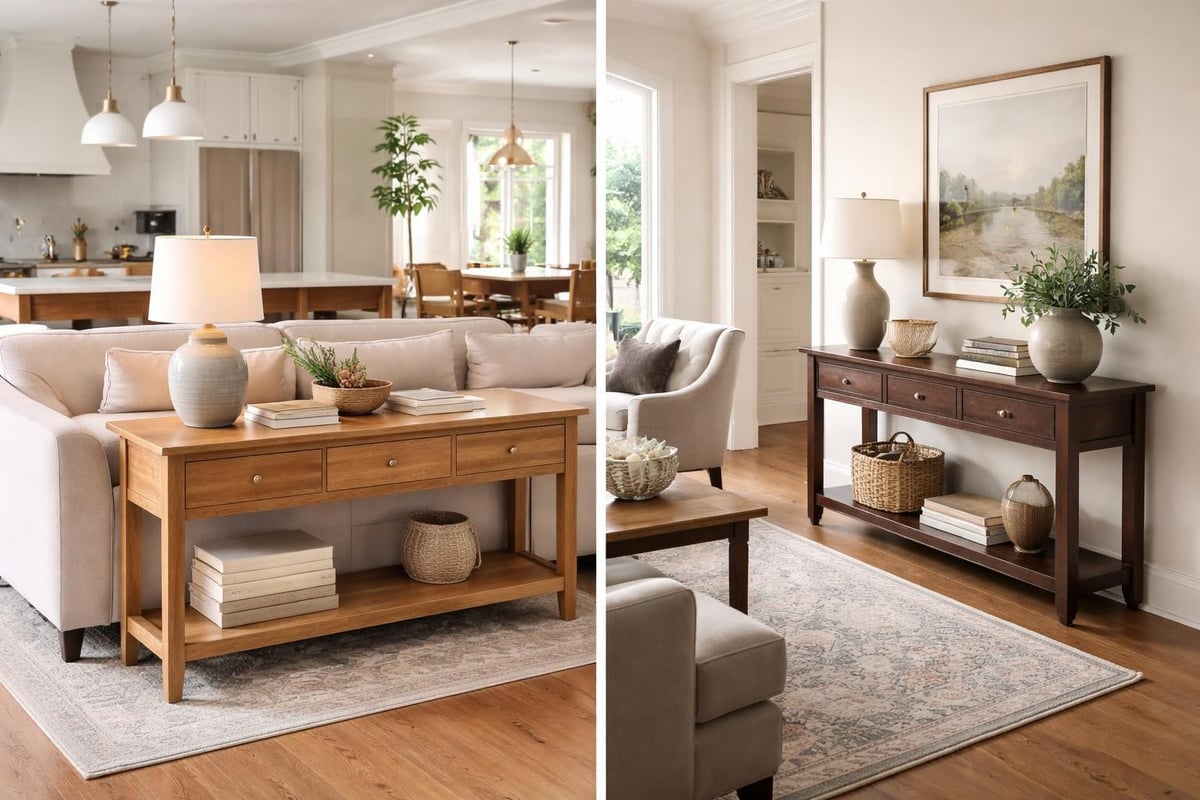
Solid wood remains the most popular choice for dining room sofa tables, offering natural beauty and exceptional durability. Oak, walnut, and ash deliver rich grain patterns and warm tones that complement both modern and traditional interiors. Dark-stained finishes add sophistication and depth, whilst lighter tones create an airy, Scandinavian-inspired aesthetic.
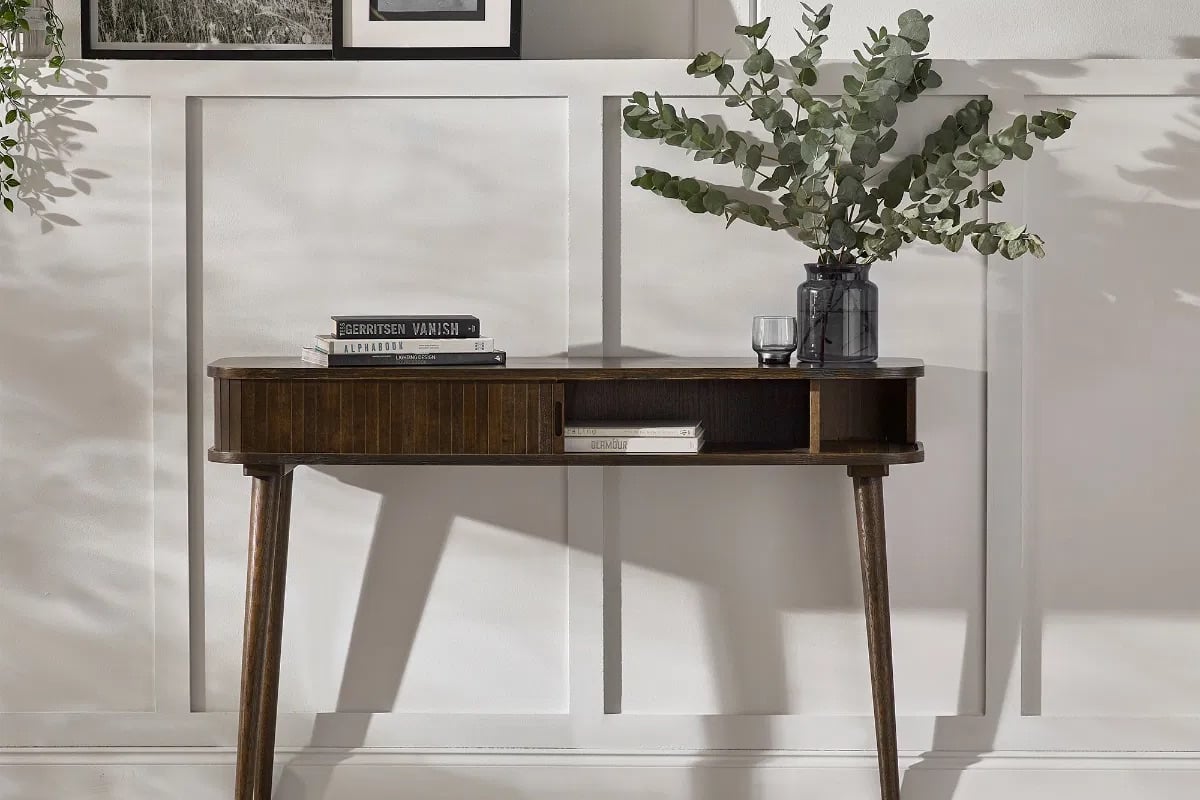
For those seeking character-rich pieces, the Bentley End Table showcases how thoughtful wood selection and craftsmanship create furniture with enduring appeal. The natural variations in grain ensure each piece carries unique visual interest.
Contemporary Alternatives
| Material | Characteristics | Best Suited For |
|---|---|---|
| Metal frames | Industrial aesthetic, slender profiles, durable | Modern, minimalist, urban interiors |
| Glass tops | Light reflection, visual transparency, easy cleaning | Small spaces, contemporary schemes |
| Marble effect | Luxury appearance, statement-making, cool palette | Elegant dining rooms, classic styles |
| Mixed media | Textural contrast, design flexibility, unique character | Eclectic, transitional, curated spaces |
The trend towards styling the back of the sofa with carefully selected furniture pieces has elevated the importance of finish quality and visual appeal from all viewing angles.
Strategic Placement and Spatial Considerations
Proper positioning maximizes both the practical utility and aesthetic impact of your dining room sofa table. Several placement strategies suit different room configurations and design objectives.
Behind the Sofa
This classic placement works beautifully in open-plan spaces where the sofa floats in the room rather than sitting against a wall. The table creates a deliberate boundary between living and dining zones whilst providing accessible surface space from both sides. Ensure adequate clearance behind the sofa, typically 30 to 45 centimetres, to allow comfortable movement and cleaning access.
When exploring dining room furniture options, consider how the sofa table integrates with your overall layout. The piece should feel intentional rather than afterthought, contributing to the room's functional flow.
Against the Wall
Wall placement suits traditional dining rooms or spaces where the sofa already sits against architectural features. This position transforms the dining room sofa table into a display console, ideal for showcasing artwork, mirrors, or decorative collections. The wall provides a visual backdrop that enhances styled vignettes and anchors table lamps or floral arrangements.
- Measure your available wall space carefully, leaving 15-20 centimetres on each side for visual breathing room
- Consider sightlines from entrance points and seating areas to ensure the table enhances views rather than obstructing them
- Account for door swings and traffic patterns to maintain comfortable circulation
- Plan for electrical outlets if you intend to use table lamps or decorative lighting
- Evaluate proportions relative to nearby furniture to achieve balanced visual weight
Styling Your Dining Room Sofa Table
The surface of your dining room sofa table offers prime real estate for personal expression and decorative storytelling. Successful styling balances aesthetic appeal with practical considerations, creating vignettes that feel curated rather than cluttered.
The Rule of Three and Layered Heights
Professional designers frequently employ the rule of three when arranging decorative objects, grouping items in odd numbers to create visual interest and dynamic composition. Vary the heights of objects to build layered depth, combining tall items like table lamps or vases with medium-height books or boxes and low-profile accessories like decorative bowls or candles.
Essential styling elements:
- Table lamps providing ambient lighting and vertical interest
- Books stacked horizontally to add colour and texture
- Natural elements such as fresh flowers, plants, or botanical specimens
- Decorative boxes offering concealed storage for small items
- Artwork or mirrors leaning casually against the wall
For those incorporating console tables into their dining spaces, these pieces offer refined surfaces perfectly suited to balanced display while maintaining the clean lines and sophisticated finishes that elevate modern British interiors.
Avoiding Common Styling Mistakes
Understanding what items to avoid placing on dining surfaces helps maintain visual harmony throughout your dining zone. Apply similar principles to your dining room sofa table, steering clear of overly personal items, excess clutter, or objects that disrupt the room's cohesive aesthetic.
Overpowering arrangements compete for attention rather than enhancing the space. Keep styling intentional and edited, allowing each piece to contribute meaningfully to the overall composition. Rotate seasonal displays to maintain visual freshness without permanent commitment to any single scheme.
Coordinating with Dining Furniture and Seating
The dining room sofa table should harmonize with your existing furniture whilst introducing complementary elements that enrich the overall design narrative. Consider how the piece relates to your dining table, chairs, and any additional storage furniture.
Matching Versus Mixing
Perfectly matched furniture suites can appear catalogue-staged and lack personality. Contemporary design embraces thoughtful mixing of styles, finishes, and periods to create interiors with depth and character. Your dining room sofa table need not match your dining table exactly, but should share some common thread-whether that's material, colour tone, or design era.
If your dining table features a dark wood finish, consider a sofa table in a complementary tone rather than an exact match. This approach adds visual interest whilst maintaining cohesion. Alternatively, introduce contrast through different materials-pairing a wooden dining table with a metal-framed sofa table creates dynamic interplay.
Considering Modern Dining Trends
The emergence of dining sofas and alternative seating has transformed how we approach dining room layouts. These comfortable, sociable seating options pair beautifully with dining room sofa tables, which can serve as convenient surfaces for setting down drinks or sharing platters during casual gatherings.
When selecting a dining room sofa table for spaces featuring mixed seating types, ensure the piece complements both traditional chairs and upholstered seating. Neutral finishes and clean-lined designs offer flexibility that adapts to evolving furniture arrangements.
Size and Proportion Guidelines
Selecting the correctly sized dining room sofa table ensures the piece enhances rather than overwhelms your space. Several measurements warrant careful consideration during the selection process.
Length Considerations
The table's length should relate proportionally to the sofa or wall it accompanies. For placement behind a sofa, aim for a table measuring approximately two-thirds to three-quarters of the sofa's total length. This creates visual balance without appearing truncated or excessive.
Against a wall, the table can occupy 50 to 75 per cent of the available wall space, leaving adequate room on either side. Avoid pushing the table into corners, as this restricts styling opportunities and creates visual tension.
| Room Size | Recommended Table Length | Ideal Depth |
|---|---|---|
| Small (under 12 m²) | 90-120 cm | 30-35 cm |
| Medium (12-20 m²) | 120-150 cm | 35-40 cm |
| Large (over 20 m²) | 150-180 cm | 40-45 cm |
Height and Depth Balance
Standard dining room sofa table heights range from 76 to 91 centimetres, aligning with sofa back heights and traditional console proportions. This measurement ensures comfortable access to the surface whilst maintaining appropriate scale relative to surrounding furniture.
Depth proves equally important, particularly in circulation areas. Tables positioned behind sofas require sufficient depth to appear substantial yet slim enough to preserve walkway clearance. A depth of 35 to 40 centimetres typically achieves this balance, offering usable surface area without spatial intrusion.
Understanding optimal dining table shapes for your room helps inform sofa table selection, as both pieces should work together to create cohesive spatial flow and visual harmony.
Storage Solutions and Practical Features
Beyond decorative appeal, many dining room sofa tables incorporate storage features that enhance their practical value. These functional additions prove particularly beneficial in dining spaces requiring accessible storage for entertaining essentials.
Drawer Configurations
Tables with drawers offer concealed storage for items you want nearby but hidden from view. Single or double drawer configurations suit different storage needs:
Single drawer benefits:
- Streamlined appearance maintaining clean lines
- Sufficient space for cutlery, napkins, or candles
- Lower visual weight in smaller rooms
Multiple drawer advantages:
- Expanded storage capacity for diverse items
- Organizational opportunities with designated spaces
- Enhanced functionality in busy dining areas
Open Shelving and Display
Lower shelves create additional display or storage tiers whilst maintaining visual lightness. These open sections suit decorative baskets, books, or carefully arranged serving pieces. The transparency prevents the table from appearing overly heavy whilst maximizing storage potential.
Consider how storage features align with your practical requirements. Those who frequently entertain may prioritize drawer space for linens and serving accessories, whilst minimalist households might prefer simpler designs focused purely on surface display.
Incorporating Lighting and Accessories
The dining room sofa table provides an ideal platform for layered lighting that enhances both functionality and ambiance. Table lamps introduce warm illumination that softens overhead lighting whilst creating visual focal points.
Selecting Appropriate Table Lamps
Choose lamps with proportions suited to your table's dimensions. The lamp base should occupy no more than one-third of the table's width, leaving ample room for additional styling elements. Heights typically range from 55 to 70 centimetres, creating balanced scale without overwhelming the surface.
Pair lamps symmetrically on longer tables for formal elegance, or use a single statement lamp on compact pieces. Mix lamp styles cautiously, ensuring cohesion through shared finishes, colours, or design sensibilities.
For comprehensive guidance on selecting lighting that complements your furniture, explore living room lounge lighting options that translate beautifully to dining spaces as well.
Decorative Accessories with Purpose
Every item placed on your dining room sofa table should earn its position through beauty, function, or both. Decorative trays corral smaller objects whilst adding metallic lustre or textural contrast. Vases-even when empty-contribute sculptural interest and provide homes for seasonal blooms.
Books introduce colour through spines and offer vertical building blocks for layered arrangements. Select titles with appealing covers or meaningful content rather than purely decorative volumes. This authenticity creates spaces that feel genuinely lived-in rather than staged.
Adapting to Different Interior Styles
The dining room sofa table adapts gracefully to diverse design aesthetics, from traditional elegance to contemporary minimalism. Selecting the right piece involves understanding how various styles translate into furniture characteristics.
Traditional and Classic Schemes
Traditional dining rooms benefit from sofa tables featuring turned legs, carved details, or rich wood finishes. Mahogany, cherry, and walnut bring warmth and formality, whilst ornate hardware adds period-appropriate detailing. These pieces pair beautifully with antique mirrors, classic table lamps with fabric shades, and symmetrical arrangements.
Consider how the table integrates with living room sofa ideas when designing cohesive open-plan spaces that blend traditional comfort with functional layout.
Modern and Contemporary Interiors
Modern dining spaces call for clean-lined dining room sofa tables with minimal ornamentation. Metal frames, glass tops, and geometric forms create visual crispness that complements contemporary architecture. Finishes in black, white, or metallic tones maintain the restrained palette typical of modern design.
Style these pieces with sculptural accessories, monochromatic colour schemes, and asymmetrical arrangements that embrace negative space. The focus remains on form, material quality, and intentional simplicity.
Transitional and Eclectic Approaches
Transitional design bridges traditional warmth with contemporary clarity, creating spaces that feel both current and comfortable. Dining room sofa tables in this category might feature simple silhouettes crafted from natural materials, combining clean lines with tactile appeal.
Eclectic schemes allow greater freedom, mixing vintage finds with modern pieces to create personality-rich interiors. Your dining room sofa table might contrast deliberately with surrounding furniture, introducing unexpected colour, texture, or stylistic references that energize the space.
Maintenance and Longevity Considerations
Quality furniture deserves proper care to maintain its appearance and structural integrity throughout years of use. Different materials require specific maintenance approaches.
Wood Care Essentials
Dust wooden dining room sofa tables regularly using soft, lint-free cloths to prevent particle buildup that can scratch finishes over time. Address spills immediately, blotting rather than wiping to avoid spreading moisture. Use coasters under drinks and felt pads beneath decorative objects to prevent ring marks and surface scratches.
Apply furniture polish or wax according to manufacturer recommendations, typically every few months. This nourishes the wood whilst enhancing its natural lustre. Avoid excessive moisture and harsh chemical cleaners that can damage finishes or strip protective coatings.
Protecting Different Surfaces
| Surface Type | Cleaning Method | Protection Tips | Frequency |
|---|---|---|---|
| Natural wood | Damp cloth + wood cleaner | Coasters, placemats, regular dusting | Weekly dusting |
| Glass tops | Glass cleaner + microfiber | Felt pads under objects | As needed |
| Metal frames | Mild soap + soft cloth | Avoid abrasives, dry thoroughly | Monthly |
| Marble effect | pH-neutral cleaner | Immediate spill cleanup | Weekly |
Regular maintenance preserves both beauty and function, ensuring your dining room sofa table remains an elegant focal point for years to come. Quality pieces from Noble & Nook combine durable construction with timeless design, rewarding proper care with lasting performance.
Seasonal Styling and Refreshing Your Display
One advantage of the dining room sofa table lies in its adaptability to seasonal changes and evolving tastes. Refreshing your display several times yearly keeps the space feeling current without requiring furniture replacement.
Spring and Summer Approaches
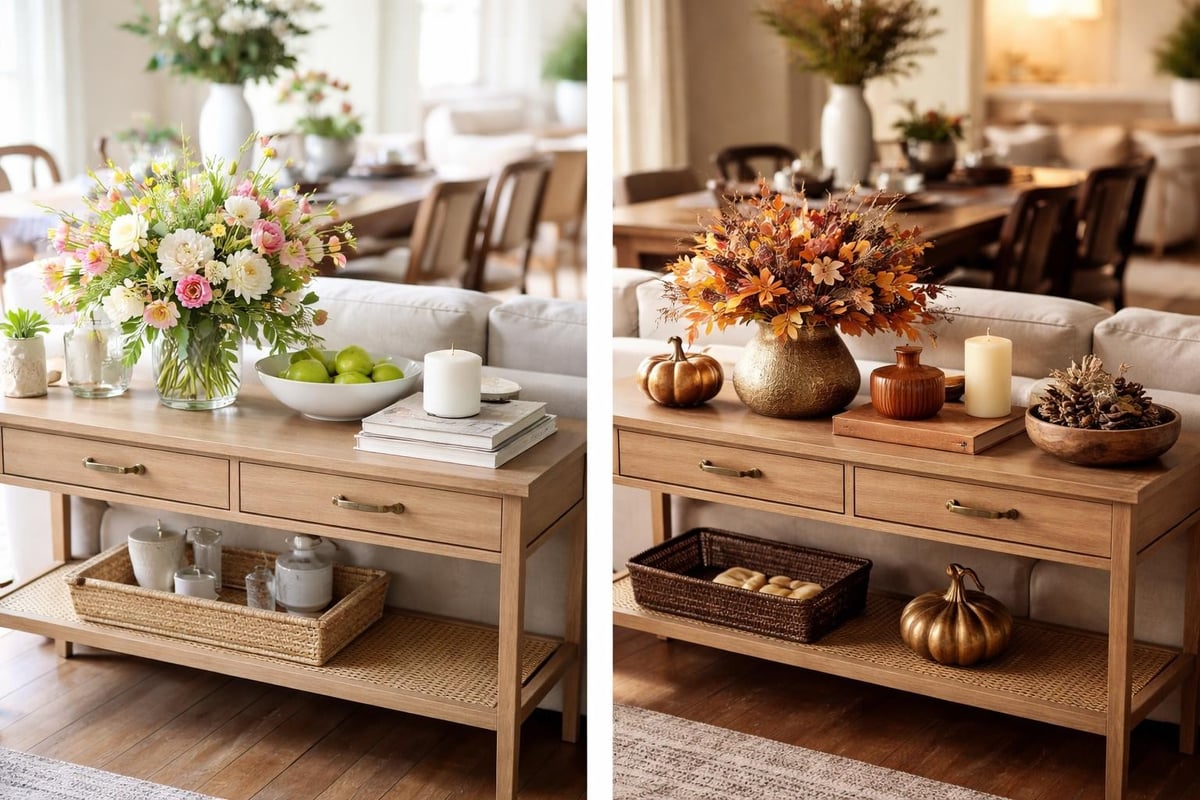
Lighter, brighter styling suits warmer months. Introduce fresh flowers in simple glass vases, swap heavy fabrics for linen or cotton textures, and incorporate coastal or botanical elements. Pale colour palettes-soft blues, greens, and whites-create airy, refreshed atmospheres that welcome increased natural light.
Consider rotating artwork or decorative objects to reflect seasonal themes without overwhelming the space with overtly thematic accessories. Subtlety maintains sophistication whilst acknowledging the changing seasons.
Autumn and Winter Transformations
Cooler months invite richer colours, warmer textures, and cosy layering. Deep jewel tones, metallic accents, and natural elements like pinecones or branches create autumnal warmth. Candles-both functional and decorative-add ambient glow during darker evenings.
Winter styling might incorporate evergreen branches, mercury glass accessories, or subtle metallic touches that catch lamplight beautifully. Maintain restraint to avoid cluttered, overly seasonal displays that quickly feel dated.
The dining room sofa table stands as a testament to thoughtful furniture design, combining practical functionality with decorative versatility in a single, elegant package. By carefully considering placement, proportion, materials, and styling, you create a piece that enhances daily living whilst elevating your interior aesthetic. Noble & Nook offers beautifully curated furniture and décor designed to transform every room with quality craftsmanship, timeless design, and the convenience of free UK mainland shipping plus flexible payment options through Klarna or PayPal.