

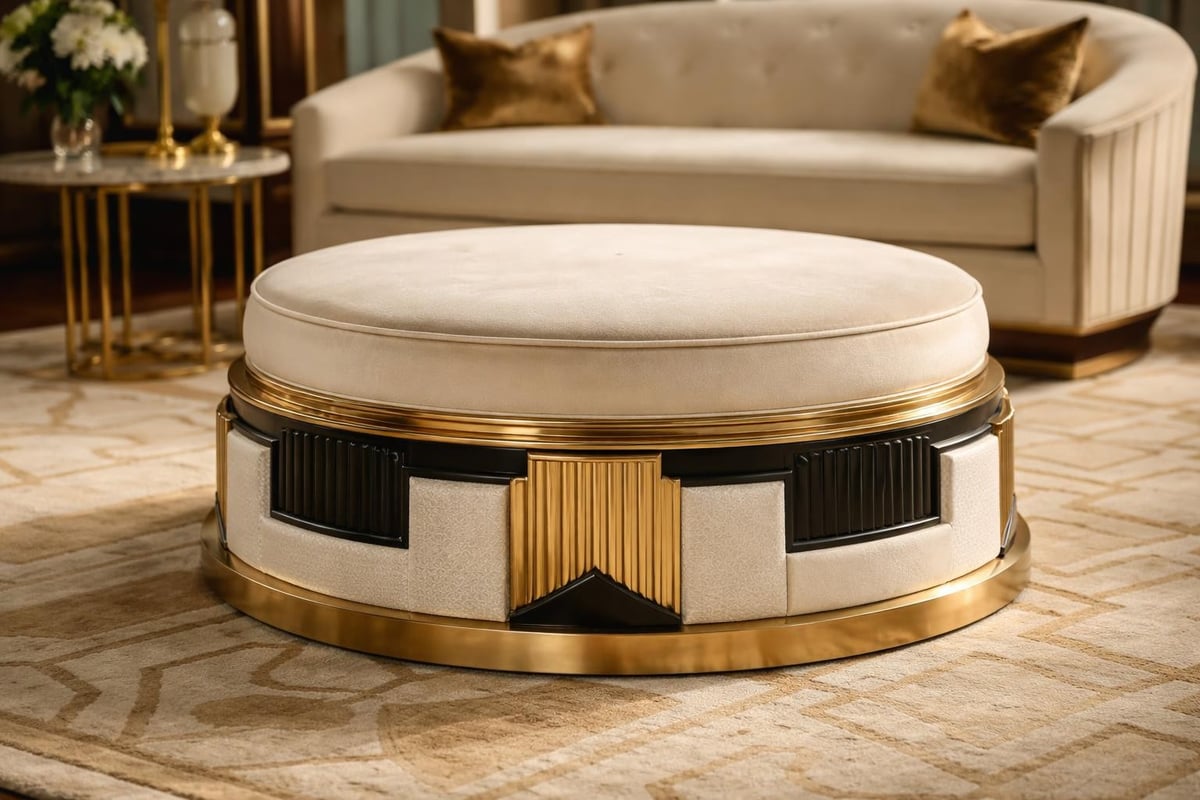
The art deco ottoman represents one of the most enduring and versatile furniture pieces to emerge from the glamorous era of the 1920s and 1930s. Combining geometric precision with luxurious materials, these ottomans embody the sophisticated aesthetic that defined Art Deco as a revolutionary design movement. Whether used as a footstool, extra seating, or a statement accent piece, an art deco ottoman brings timeless elegance to contemporary British homes whilst maintaining its practical functionality.
Understanding Art Deco Design Heritage
Art Deco emerged during the interwar period as a celebration of modernity, luxury and craftsmanship. The movement drew inspiration from diverse sources, including ancient Egyptian motifs, Cubist art, and streamlined industrial design.
Key Characteristics of Art Deco Furniture
The defining features of Art Deco furniture set it apart from both its Victorian predecessors and contemporary minimalist designs. Bold geometric shapes form the foundation of this aesthetic, with stepped profiles, chevron patterns, and symmetrical arrangements creating visual drama.
Material selection plays a crucial role in authentic Art Deco pieces:
- Exotic woods such as walnut, ebony, and zebrawood
- Lacquered surfaces in black, cream, or bold colours
- Luxurious upholstery in velvet, leather, or silk
- Metallic accents featuring chrome, brass, or gilded details
- Decorative elements including sunburst motifs and geometric inlays
The movement's influence extended across multiple cultures and continents. Art Deco in the United States showcased how American designers adapted European principles to create distinctly bold interpretations, whilst Ottoman art traditions contributed decorative techniques that influenced the movement's ornamental vocabulary.
Historical Context and Evolution
The term "Art Deco" derives from the 1925 Exposition Internationale des Arts Décoratifs et Industriels Modernes in Paris. This landmark exhibition showcased furniture that rejected the flowing organic lines of Art Nouveau in favour of crisp, angular forms.
An art deco ottoman from this period often featured compact proportions suited to the smaller urban apartments becoming common in major cities. Designers prioritised multifunctionality, creating pieces that served as both practical furniture and artistic statements.
Material Selection and Craftsmanship
Authentic art deco ottoman pieces demonstrate exceptional attention to material quality and construction techniques. The movement celebrated both traditional craftsmanship and modern manufacturing methods, resulting in furniture that balanced artistry with accessibility.
| Material Type | Common Choices | Visual Impact |
|---|---|---|
| Wood | Walnut, mahogany, rosewood | Rich depth, natural grain patterns |
| Upholstery | Velvet, mohair, leather | Tactile luxury, colour saturation |
| Trim | Brass nailheads, chrome piping | Refined detailing, metallic contrast |
| Legs/Base | Geometric wood, tapered metal | Architectural stability, visual lift |
Upholstery Fabrics and Finishes
Velvet remains the quintessential art deco ottoman fabric, offering both visual richness and tactile appeal. Deep jewel tones such as emerald green, sapphire blue, and ruby red were particularly popular, though sophisticated neutrals in champagne, taupe, and charcoal also featured prominently.
The pile direction of velvet creates subtle colour variations as light catches the fabric from different angles. This luminous quality enhances the geometric patterns often incorporated into ottoman designs through tufting, piping, or contrasting fabric panels.
Leather upholstery provides an alternative that ages gracefully whilst maintaining the period's luxurious character. Top-grain leather in cognac, chocolate, or black develops a distinguished patina over time, complementing the warm tones of wooden bases and frames.
Incorporating Art Deco Ottomans in Modern Interiors
Contemporary British homes offer numerous opportunities to integrate an art deco ottoman without creating a themed period room. The key lies in balancing vintage character with current design sensibilities.
Living Room Applications
In lounge spaces, an art deco ottoman serves multiple functions whilst anchoring the room's aesthetic. Positioned before a sofa, it provides comfortable footrest functionality whilst maintaining visual interest through its geometric form and luxurious materials.
Pairing an art deco ottoman with contemporary seating creates sophisticated contrast. The ottoman's bold lines and rich textures complement modern minimalist furniture, preventing spaces from feeling either too stark or excessively ornamental.
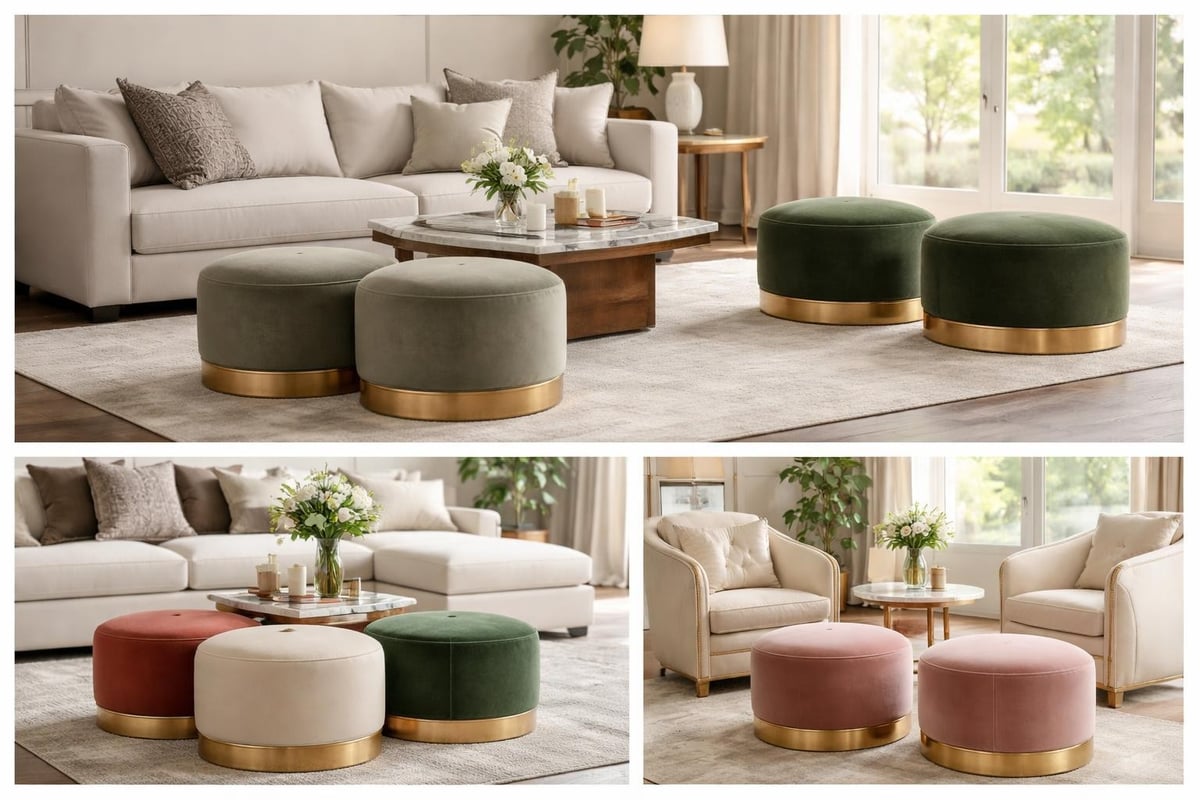
Consider these placement strategies:
- Before the sofa as a traditional footstool with serving tray functionality
- Beside an accent chair to create an intimate reading nook
- Centred beneath a chandelier as a statement piece in larger rooms
- Paired symmetrically flanking a fireplace or console table
- Clustered in groups replacing traditional coffee tables
Bedroom Styling Opportunities
An art deco ottoman brings Hollywood glamour to bedroom settings. Positioned at the foot of the bed, it provides a practical surface for laying out clothing whilst enhancing the room's visual sophistication.
The geometric forms and luxurious materials complement dressing tables beautifully, creating cohesive vanity areas that reference vintage boudoir elegance. Choose ottomans with internal storage to maximise functionality in smaller bedrooms.
Hallway and Entrance Features
First impressions matter, and an art deco ottoman in an entrance hall immediately establishes refined taste. Compact ottomans with firm upholstery provide convenient seating for removing shoes whilst contributing architectural interest to often-overlooked transitional spaces.
Hallways present opportunities to showcase bolder colour choices that might overwhelm larger living areas. A jewel-toned art deco ottoman against neutral walls creates dramatic focal points without cluttering limited floor space.
Identifying Authentic and Quality Pieces
Whether sourcing vintage originals or contemporary reproductions, understanding quality markers ensures wise investment in an art deco ottoman that delivers lasting value.
Construction Quality Indicators
Examine the ottoman's frame construction, which should feature solid hardwood joinery rather than particle board or plywood. Authentic period pieces and quality reproductions employ traditional techniques including mortise-and-tenon joints, dovetailing, and corner blocks.
Frame assessment checklist:
- Solid hardwood construction throughout
- Hand-finished joints with no visible glue excess
- Substantial weight indicating quality materials
- Symmetrical proportions with precise angles
- Stable base without wobbling or flexing
Upholstery Evaluation
Professional upholstery distinguishes investment-worthy pieces from mass-market alternatives. Quality art deco ottoman upholstery features dense foam or traditional horsehair padding that maintains shape over years of use.
| Quality Level | Padding Type | Fabric Weight | Finishing Details |
|---|---|---|---|
| Premium | Horsehair, down | Heavy velvet (450g/m²+) | Hand-applied nailheads, double welting |
| Standard | High-density foam | Medium velvet (300-400g/m²) | Machine nailheads, single piping |
| Budget | Standard foam | Lightweight fabric (<300g/m²) | Minimal trim, stapled finishing |
Inspect seams and trim work for precision and durability. Hand-applied brass nailheads should be evenly spaced and firmly secured, whilst piping should feature taut, consistent lines without puckering or gaps.
Contemporary Art Deco Ottoman Variations
Modern interpretations of the art deco ottoman adapt period aesthetics to current lifestyle requirements whilst preserving the style's essential character. Designers blend vintage inspiration with practical innovations, creating pieces suited to twenty-first-century living.
Storage Integration
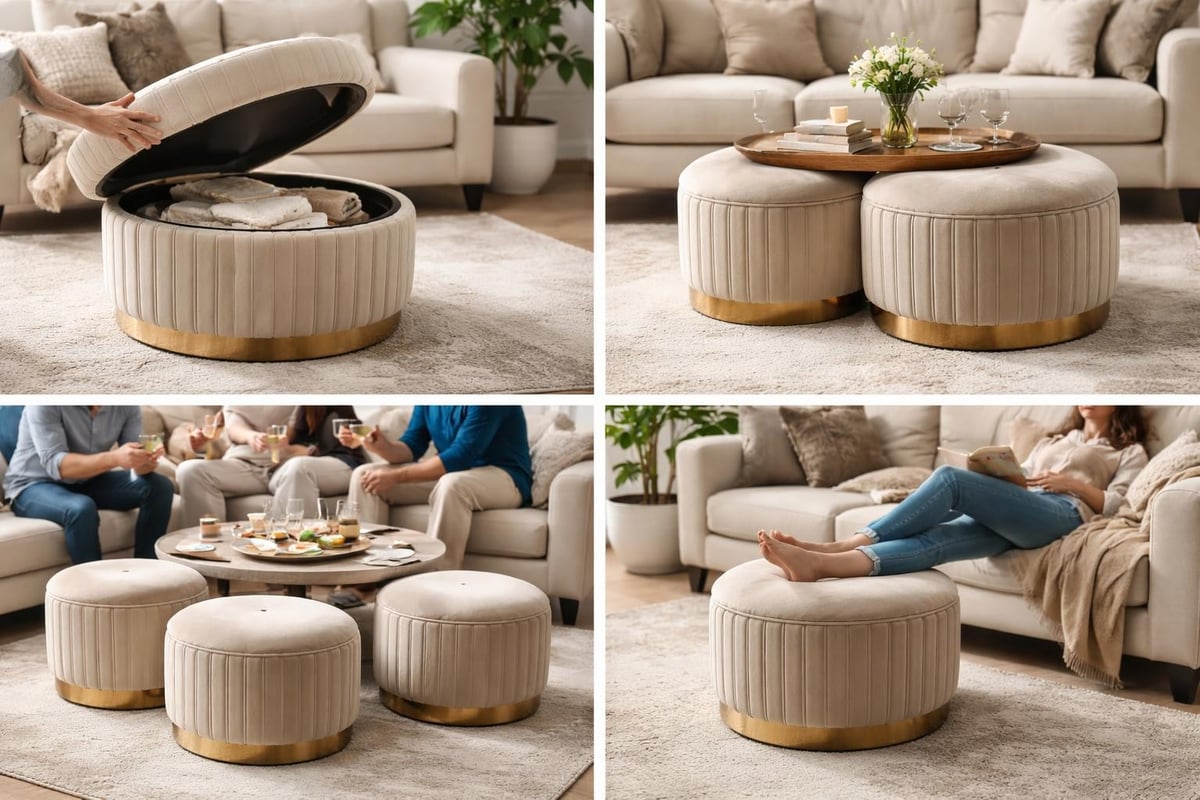
Contemporary art deco ottoman designs frequently incorporate hidden storage compartments, addressing modern needs for organisation without compromising aesthetic integrity. Lift-top mechanisms provide access to spacious interiors suitable for storing throws, magazines, or seasonal items.
Quality hinges ensure smooth operation whilst maintaining the ottoman's clean geometric lines when closed. Some designs feature divided interiors or removable trays, maximising organisational potential whilst preserving the sleek exterior that defines Art Deco styling.
Modular and Sectional Options
Sectional art deco ottoman arrangements offer flexibility for larger spaces or evolving room configurations. Individual units maintain period-appropriate proportions and detailing whilst allowing creative arrangements that suit contemporary open-plan living.
These modular approaches work particularly well in living room settings where furniture arrangements shift to accommodate different activities. Ottomans can cluster as a coffee table alternative for entertaining, then separate into individual seating or footstools for daily use.
Size and Scale Considerations
Proportions significantly impact how successfully an art deco ottoman integrates into existing room schemes. Oversized ottomans make bold statements in spacious lounges, whilst compact versions suit smaller flats without sacrificing style.
Standard dimensions typically range from 40cm to 60cm in height, with widths varying from petite 50cm squares to generous 120cm rectangles. Consider ceiling height, surrounding furniture scale, and circulation space when selecting appropriate proportions.
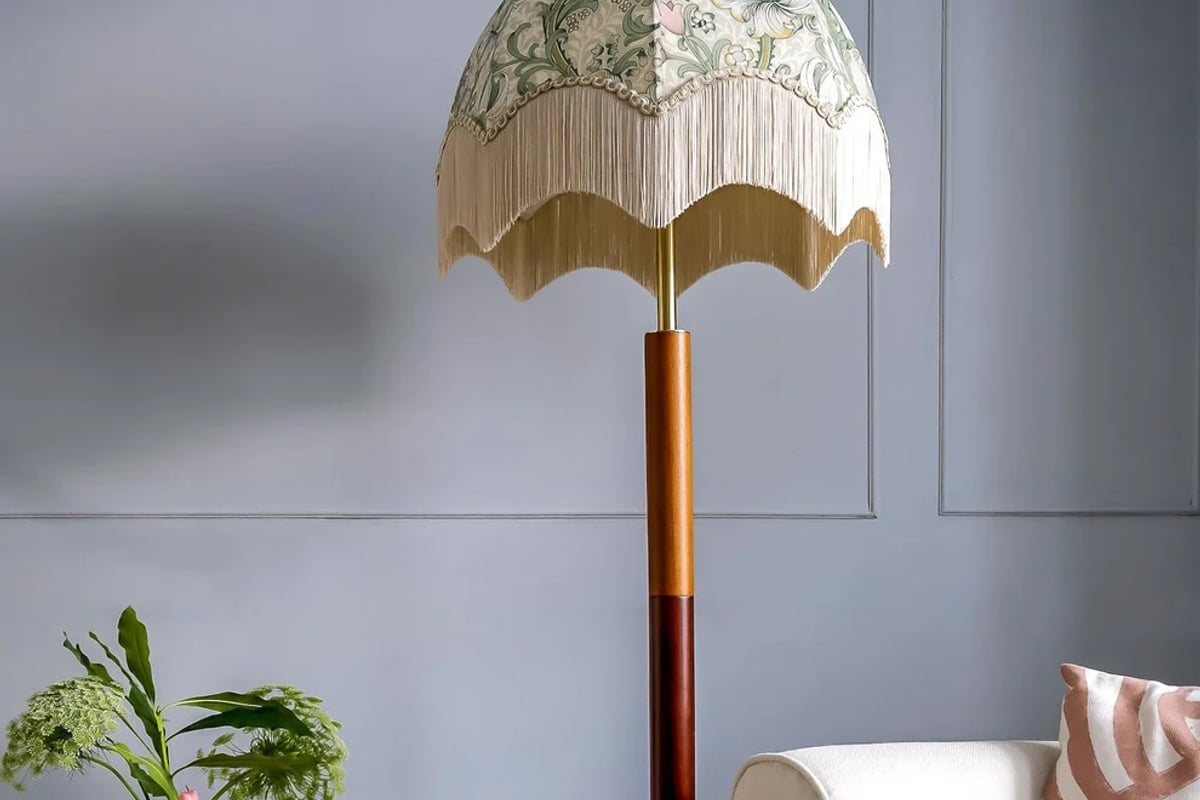
For those drawn to Art Deco's glamorous aesthetic, our Handmade Lampshades collection offers pieces that echo the same geometric elegance and luxurious detailing. Drawing inspiration from the movement's characteristic glamour, these handcrafted lampshades complement Art Deco furniture beautifully whilst bringing warm, atmospheric lighting to your interior.
Colour Palettes and Pattern Integration
Colour choices profoundly influence how an art deco ottoman contributes to overall room aesthetics. Period-appropriate palettes ranged from dramatic jewel tones to sophisticated neutrals, each creating distinct atmospheric effects.
Classic Art Deco Colour Schemes
Traditional Art Deco interiors favoured bold contrasts and saturated hues. An art deco ottoman in emerald velvet against cream walls and dark wood flooring recreates quintessential 1930s glamour, whilst midnight blue or deep burgundy options offer equally authentic alternatives.
Metallic accents enhanced these rich colours, with gold, silver, and bronze elements providing luminous contrast. Chrome-legged ottomans upholstered in jewel-toned fabrics exemplify this classic combination, balancing warmth with industrial-age modernity.
Period-authentic colour combinations:
- Black lacquer with gold metallic accents
- Cream and chocolate with brass detailing
- Teal and coral with chrome elements
- Burgundy and navy with silver trim
- Dove grey and blush with champagne highlights
Contemporary Neutral Approaches
Modern interpretations often favour restrained palettes that reference Art Deco principles through form rather than colour. An art deco ottoman in charcoal, taupe, or warm grey provides geometric interest and luxurious texture whilst maintaining versatility across evolving interior schemes.
These neutral options complement contemporary British design preferences for understated elegance. The ottoman's distinctive silhouette and quality materials convey period character without requiring commitment to bold colour statements.
Maintenance and Longevity
Proper care ensures an art deco ottoman remains a treasured furniture piece for decades. Different materials require specific maintenance approaches, though all benefit from regular attention and preventive measures.
Fabric Upholstery Care
Velvet and other pile fabrics demand gentle handling to preserve their lustrous appearance. Regular vacuuming with upholstery attachments removes dust and prevents particle accumulation that dulls fabric over time.
- Vacuum weekly using low suction and appropriate attachments
- Brush pile fabrics in the direction of the nap to restore texture
- Address spills immediately with blotting (never rubbing) motions
- Schedule professional cleaning annually for deep maintenance
- Rotate ottomans periodically to ensure even wear patterns
Wood and Metal Element Preservation
Wooden bases and frames benefit from occasional treatment with quality furniture polish appropriate to their finish. Avoid silicone-based products that create buildup, instead choosing natural waxes that nourish wood whilst enhancing its patina.
Chrome and brass elements require different approaches. Chrome maintains its shine through simple wiping with microfibre cloths, whilst brass develops attractive patina that many prefer to preserve rather than polish away.
Styling Complementary Furniture and Accessories
An art deco ottoman rarely stands alone; surrounding pieces and decorative elements either enhance or diminish its impact. Thoughtful curation creates cohesive interiors that honour the style's sophisticated heritage.
Furniture Pairings
Armchairs and accent seating with clean lines and quality upholstery complement art deco ottoman aesthetics beautifully. Look for pieces featuring geometric forms, tapered legs, and luxurious fabrics that echo rather than exactly match the ottoman's character.
Coffee tables with glass tops and metallic frames provide functional surfaces whilst maintaining visual lightness that prevents rooms from feeling heavy. The transparency allows the ottoman's form to remain prominent whilst creating layered visual interest.
Mixing periods and styles prevents interiors from becoming costume-like. An art deco ottoman paired with mid-century modern seating and contemporary side tables creates collected, sophisticated spaces that feel authentically lived-in rather than staged.
Decorative Accessories
Mirrors, lighting, and artwork complete the aesthetic story an art deco ottoman begins. Sunburst mirrors, geometric wall sconces, and abstract artwork featuring strong lines and bold shapes reinforce period sensibilities without overwhelming spaces.
Table lamps with sculptural bases and geometric shades provide functional lighting whilst contributing to the overall design narrative. Choose finishes that complement rather than match the ottoman's metallic elements for sophisticated coordination.
Textiles including cushions and throws offer opportunities to introduce pattern whilst maintaining colour cohesion. Geometric prints, chevron stripes, and stylised floral motifs characteristic of Art Deco textile design work beautifully alongside solid velvet upholstery.
Investment Value and Collecting Considerations
An art deco ottoman represents both aesthetic and financial investment, particularly when selecting authentic period pieces or quality contemporary reproductions. Understanding market dynamics and value indicators supports informed purchasing decisions.
Vintage Market Assessment
Original 1920s-1940s art deco ottoman pieces command premium prices, particularly those by recognised designers or manufacturers. Provenance documentation, maker's marks, and period-correct materials significantly impact value.
Examples from specialist dealers showcase restored pieces that demonstrate investment-grade quality. Restored walnut ottomans with period-appropriate velvet upholstery reflect the craftsmanship and materials that collectors value.
Contemporary Quality Reproductions
Modern manufacturers produce art deco ottoman interpretations ranging from faithful reproductions to contemporary designs inspired by period aesthetics. Quality varies significantly, making careful evaluation essential.
Contemporary designers create pieces that honour Art Deco principles whilst incorporating modern comfort standards and construction techniques. These interpretations often prove more practical for daily use than delicate vintage pieces whilst still delivering authentic style.
When investing in contemporary pieces, prioritise:
- Solid hardwood frames with traditional joinery
- Premium upholstery fabrics in appropriate weights
- Hand-applied finishing details and trim work
- Proportions and forms faithful to period examples
- Reputable manufacturers with quality guarantees
An art deco ottoman brings timeless sophistication and practical versatility to modern British homes, whether you choose authentic vintage pieces or quality contemporary interpretations. The style's emphasis on geometric form, luxurious materials, and expert craftsmanship ensures these pieces remain relevant across changing interior trends. At Noble & Nook, we understand the importance of selecting furniture that combines enduring style with everyday functionality, offering curated collections that elevate every room with free UK mainland delivery and flexible payment options to make quality furniture accessible.