

Botanical wall art has become a staple in contemporary homes across the UK. Whether you’re decorating a compact London flat or a Victorian terrace in Manchester, prints featuring leaves, flowers, and foliage offer a brilliant way to bring nature indoors without the upkeep of a full indoor jungle.
But here’s the thing: hanging a few leaf prints on the wall doesn’t automatically create a cohesive, modern look. The difference between “Pinterest-worthy” and “charity shop jumble” comes down to thoughtful choices about scale, placement, colour, and framing.
This guide walks you through everything you need to know about styling botanical art in modern UK homes, from choosing the right pieces for each room to hanging heights that actually work in British properties.
Quick Answer: How to Style Botanical Wall Art in a Modern UK Home
If you’re short on time, here’s the essential formula: focus your botanical art on one or two key walls, repeat two or three greens from your plants and soft furnishings, choose simple frames in black, oak or white, and hang at eye level. That’s the foundation of a modern, pulled-together look.
- Start with one focal area rather than scattering pieces thinly across the room. Above a sofa, bed, or dining table works best because these anchor points give your art purpose and presence.
- Pair botanical prints with real plants to strengthen the biophilic look. A fiddle-leaf fig by the window, trailing pothos on shelves, or a simple eucalyptus stem in a vase creates depth and makes the whole space feel genuinely alive.
- Choose clean-lined frames to keep things contemporary. Black metal, pale oak, or white box frames read as modern, while ornate gold or dark mahogany tips the look toward country cottage territory.
- Consider typical UK light conditions. North-facing Victorian terraces and compact new-build flats often have limited natural light. Softer greens and lighter backgrounds work best in these spaces, preventing art from feeling heavy or gloomy.
- Use this starter formula: one large botanical above your main furniture, a small pair or trio on a secondary wall, and one print styled on a shelf or sideboard. This creates visual rhythm without overwhelming the room.

What Is Botanical Wall Art and Why It Suits Modern UK Homes
Botanical wall art refers to prints, paintings, and photographs featuring plants, flowers, foliage, and garden or forest details. The category spans everything from scientific-style detailed illustrations to abstract leaf shapes and moody photographic close-ups of ferns.
- It complements popular UK interior trends. Whether your home leans Scandi-inspired neutral, modern farmhouse, mid-century, or Japandi minimalist, botanical art slots in without clashing. The organic shapes soften the clean lines that define most contemporary interiors.
- It works with current UK colour palettes. Greige, warm white, sage green, and charcoal have dominated British homes in recent years. Leafy motifs in these tones feel intentional rather than random, creating a calming mood that flows through the whole space.
- It brings the outside in for urban dwellers. In cities like London, Manchester, and Birmingham where private gardens are limited, botanical wall art satisfies our innate connection to nature. This concept, known as biophilic design, has driven demand for nature-inspired decor since the 1980s.
- It’s perfect for renters. Unlike wallpaper or paint, wall art is completely reversible. You can add personality and style to a rented house without risking your deposit or negotiating with landlords.
- It comes in distinct styles. Vintage botanical illustrations (think 18th-century scientific plates), modern abstract leaves, monochrome line drawings, and photographic foliage all fall under the botanical umbrella. Each creates a different atmosphere, giving you options regardless of your interior preferences.
Choosing the Right Botanical Art for Each Room
Modern styling depends on matching subject, scale, and colour to each room’s function and natural light. A print that looks perfect in your bedroom might feel completely wrong in the kitchen.
Living Room
Your living space is typically the largest room and the natural home for a statement piece. Consider an oversized tropical leaves print (around 80–100cm wide) above the sofa, or a neat 3x3 grid of coordinated fern or palm prints for a curated collection feel.
Green botanical art works particularly well here because, as interior experts note, green is universally calming and creates an instant sense of life and freshness. It won’t compete with other decor but will quietly enhance everything around it.
Bedroom
This room calls for softer, more restful imagery. Watercolour eucalyptus stems or meadow flowers in muted tones above the headboard create a serene focal point without overstimulating. Avoid anything with neon palettes or extremely busy compositions that might disrupt the calm you want for sleep.
Monochrome botanical line drawings on white or cream backgrounds work beautifully in minimalist bedrooms, adding organic interest while preserving the simplicity.
Kitchen and Dining
Herb prints featuring rosemary, basil, and thyme feel natural in kitchen spaces, as do citrus branches or vegetable studies. Frame these under glass for easy cleaning, and position them above a dining bench, breakfast bar, or in the narrow space between wall cabinets.
For small UK kitchens, vertical art above splashbacks or in corners adds character without consuming precious counter space.
Hallways and Staircases
These transitional spaces suit narrow, vertical botanical prints, single stem florals, tall grasses, or elongated fern studies. A staggered gallery wall following the slope of the stairs creates visual interest in what might otherwise be a forgettable passage.
As one interior source notes, a botanical display in a hallway can create a “welcoming pathway” reminiscent of walking through a lush garden.
Home Office
Clean leaf line drawings or minimalist fern studies create calm without distraction. Position them behind your desk for a polished video-call background that looks professional but personal.
Green is specifically recommended for workspaces because of its associations with focus and positive mood—particularly relevant as hybrid working becomes standard across the UK.
Bathroom
Bathrooms love a little greenery, real or printed. Choose moisture-tolerant prints behind glass or acrylic; seaweed, palm, or monstera photographs work well with tiled walls and compact dimensions. This transforms a functional room into something closer to a spa-like retreat.
Popular Botanical Styles for Contemporary UK Interiors
Different artistic approaches create distinct moods while all feeling modern. Understanding these styles helps you choose art that genuinely suits your space.
|
Style |
Best For |
Characteristics |
|---|---|---|
|
Minimalist line art |
Monochrome or grey interiors |
Black ink outlines on off-white backgrounds |
|
Soft watercolour |
Scandi or boho rooms |
Dusty pinks, sages, and blues with organic flow |
|
Tropical/jungle |
Urban flats wanting drama |
Bold monstera, banana leaves, palm fronds |
|
Vintage illustration |
Eclectic or classic schemes |
18th-19th century style with modern framing |
|
Abstract leaf art |
Mid-century spaces |
Colour blocks in mustard, rust, terracotta |
|
Monochrome botanical |
Japandi minimalism |
Sepia or charcoal sketches of stems and grasses |
Minimalist line art uses clean black ink outlines of leaves or stems on off-white backgrounds. This style is ideal for grey or monochrome contemporary homes where you want botanical interest without adding colour complexity.
Soft watercolour botanicals feature eucalyptus, wildflowers, and meadow grasses in dusty pinks, sages, and blues. These suit relaxed Scandi or boho rooms where the eclectic feel comes from layered textures rather than bold colours.
Tropical and jungle prints make a bolder statement with monstera, banana leaves, and palm fronds. These create an urban jungle vibe in city flats and align with the ongoing trend for escapist, nature-rich interiors.
Vintage botanical illustrations draw from 18th and 19th-century scientific plates. Updated with slim modern frames, they avoid a stuffy museum feel while adding sophistication and a sense of history. Interior trend forecasters have identified this historical aesthetic as part of the “New Exoticism” movement.
Abstract leaf art simplifies botanical forms into blocks of colour and geometric shapes. Mustard, rust, terracotta, and teal palettes suit mid-century and contemporary schemes looking for warmth and visual interest.
Monochrome and neutral botanicals use sepia or charcoal sketches of stems and grasses. Perfect for Japandi-influenced interiors where restraint and natural beauty take priority.

Frame, Mount, and Material Choices
Frames and finishes are crucial for keeping botanical art feeling current rather than dated. The wrong frame can undermine even the most beautiful print.
- Slender black metal or square-edged oak frames suit most modern UK homes. These clean lines complement contemporary furniture without drawing attention away from the artwork itself. Avoid heavy, ornate gold frames unless you’re intentionally going for an eclectic, maximalist look.
- White or cream mounts give breathing space around detailed botanical illustrations. This is particularly important when hanging art on patterned or coloured walls, as it prevents the imagery from feeling cramped or overwhelming.
- Canvas versus framed prints comes down to room style and size. Canvases work well in large, relaxed spaces where a gallery feel isn’t the goal. Framed glass suits smaller rooms or more polished, formal looks.
- Metal or acrylic panels offer an ultra-modern option for industrial-style flats with exposed brick, concrete, or black window frames. These materials create a sleek, contemporary finish that traditional frames can’t match.
- Consider sustainability. FSC-certified wood frames, UK-printed art to reduce shipping distances, and recycled-paper prints appeal to eco-conscious buyers. Many UK-based printmakers now highlight these credentials.
Layout Ideas: From Grids to Gallery Walls
How you arrange botanical prints matters as much as what you choose. These techniques work well with common UK wall sizes, chimney breasts, alcoves, and new-build corridors.
Grid Layout
Hang 4, 6, or 9 same-size botanical prints in a perfect grid above a sofa or sideboard. Maintain consistent spacing—around 5–7cm between frames creates a clean, ordered appearance. This works particularly well with vintage botanical plates or a series of fern studies.
Casual Gallery Wall
Mix botanicals with line art, typography, and perhaps a landscape picture, using similar colours or frame tones so the display still looks curated rather than chaotic. This approach creates an eclectic feel while remaining cohesive.
Picture Ledges
Narrow shelves above a sofa or desk let you layer different botanical prints and rotate them seasonally without re-drilling walls. This is a perfect choice for renters or anyone who enjoys changing their decor regularly.
Oversized Statement Piece
One large botanical canvas or framed print should span at least two-thirds the width of the furniture beneath it. This creates proper visual balance and prevents the art from looking lost on the wall.
Vertical Stacks
Two or three aligned botanical prints can frame a doorway, fill a chimney breast, or anchor a narrow wall between windows. This technique maximises visual impact in spaces where horizontal arrangements won’t fit.
Propping Art
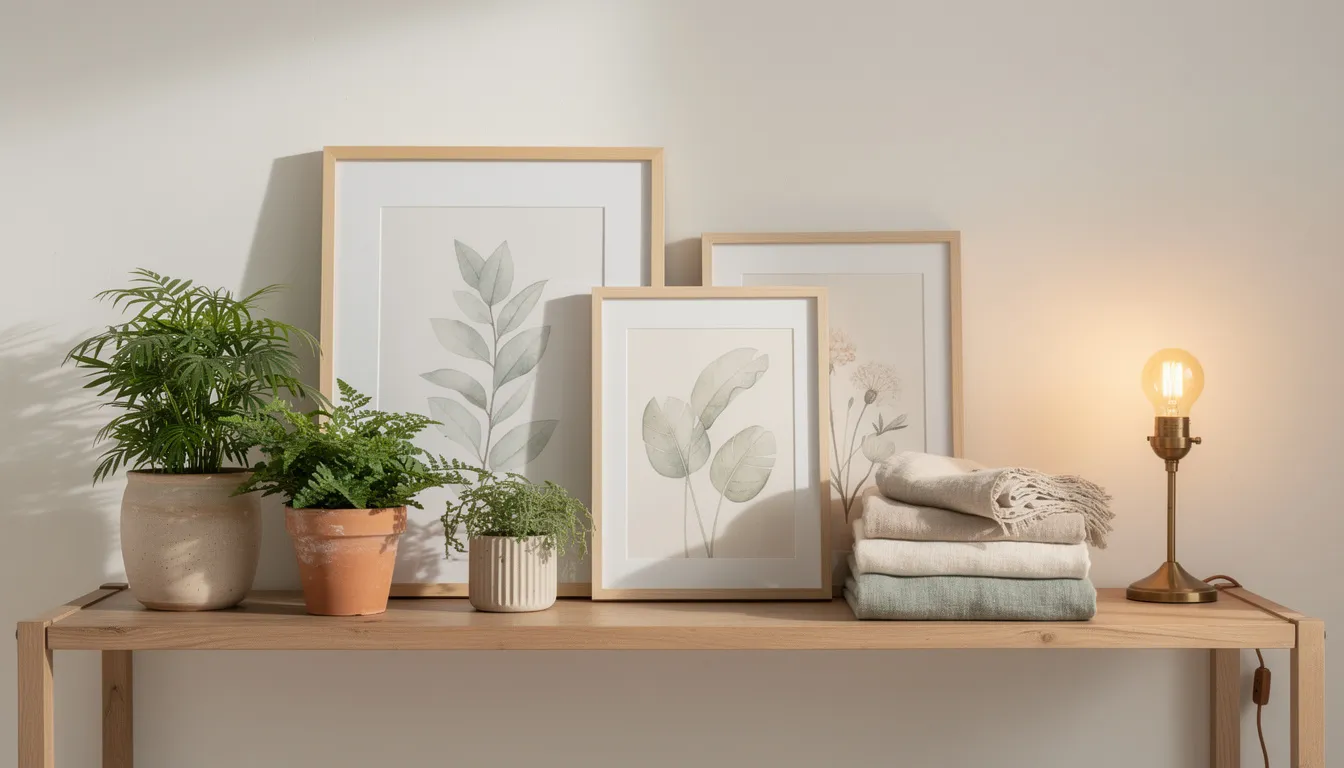
Leaning framed botanicals on a mantle, console, or bedroom chest of drawers creates a relaxed but intentional look. Layer different sizes with the larger pieces at the back, and add small plants or candles to complete the display.
Hanging Heights and Practical Tips
Getting the height right makes a significant difference, especially in UK homes with varied ceiling heights from Victorian high ceilings to compact new-builds.
- Standard eye-level hanging means positioning the centre of the artwork around 145–150cm from the floor. This works in most rooms and ensures the art can be appreciated without craning your neck.
- Above sofas and beds, leave roughly 15–25cm between the top of the furniture and the bottom of the frame. This connects the art to the furniture rather than leaving it floating awkwardly.
- Renters should use removable picture strips and hooks to avoid damage, especially in new-build plasterboard walls that can crumble with standard fixtures.
- Plan layouts on the floor first or use masking tape templates on the wall before drilling. This prevents unnecessary holes and helps you visualise spacing before committing.
- Protect your investment by avoiding direct, intense sunlight on prints to reduce fading. Dust frames regularly with a soft cloth to keep them looking fresh.
Coordinating Botanical Art with Colour Schemes and Textures
Integrating prints with existing sofas, rugs, and soft furnishings creates a cohesive look that feels designed rather than accidental.
Colour echoing is the simplest coordination technique. Pick out one or two leaf shades from the artwork—sage, olive, or forest green work well—and repeat them in cushions, throws, or lamp bases. This creates subtle connections across the room.
For neutral spaces with white or grey walls, choose muted foliage with soft beige or taupe backgrounds. This avoids harsh contrast while still adding natural interest.
Dark and moody rooms with navy, charcoal, or deep green feature walls need high-contrast botanicals. Light backgrounds and bolder leaf shapes will stand out rather than disappearing into the darkness.
Texture pairing enhances the natural feel. Team botanical art with linen curtains, jute rugs, rattan lampshades, and wooden coffee tables. These materials share an organic quality that makes the whole scheme feel grounded.
Metallic accents add a contemporary edge. Brushed brass or black metal floor lamps, frames, and plant stands elevate botanical schemes from casual to high-end.
Seasonal switch-ups keep rooms feeling fresh. Lighter floral prints work beautifully in spring and summer, while deeper woodland or fern motifs suit the moodier atmosphere of autumn and winter.
Mixing Botanical Art with Other Artwork
A modern home rarely uses botanicals alone. Mixing styles creates a curated, personal collection that tells a story.
- Pair botanicals with abstract art that shares one or two key colours. This ensures the wall feels cohesive rather than chaotic, even with different styles side by side.
- Combine line-drawn leaves with typography prints—short quotes, city coordinates, or meaningful words—in similar fonts or frame colours. This adds personality without clashing.
- Balance busy floral pieces with calmer, single-stem studies to avoid overwhelming small UK rooms. Not every botanical needs to be a complex composition.
- Include family photographs in soft, desaturated tones alongside botanical prints on a gallery wall. This blend of personal and decorative creates warmth and interest.
Room-by-Room Styling Examples in Modern UK Homes
Here are concrete vignettes based on real-world layouts typical across the UK.
Modern London Flat
An open-plan living and dining space with white walls presents the perfect canvas for botanical art. Position a large tropical leaf print behind the sofa as the focal point, then add smaller herb prints in the kitchen zone—all in slim black frames for consistency. The visual line between spaces feels connected but defined.
Victorian Terrace in Manchester
A sage green living room with original features calls for vintage-style fern plates arranged in a grid on the chimney breast. Flank the alcoves with pairs of abstract leaf prints in natural oak frames. The combination honours the period charm while feeling thoroughly modern.
New-Build Family Home in Leeds
A light grey bedroom benefits from a pair of eucalyptus watercolour prints above a king-size bed. Echo the imagery with real eucalyptus stems in a vase on the bedside table. The colour palette stays serene while adding just enough visual interest to elevate the space beyond builder-basic.
Compact Home Office Under the Stairs
Space is tight, so a single vertical botanical line drawing makes a statement without overwhelming. Add a narrow picture ledge with two small potted plants and one tiny floral print. This creates a layered look that feels curated despite the minimal floor space.
Small Windowless Hallway
Natural light is non-existent, so brightness matters. A trio of slim wildflower prints with warm white backgrounds illuminates the space visually. Combine with a jute runner and simple wall hooks for a welcoming atmosphere that feels considered rather than forgotten.
Buying and Caring for Botanical Wall Art in the UK
Practical considerations can make or break your botanical art experience. Here’s what to know before you buy and after you hang.
- Check dimensions carefully in centimetres and use masking tape outlines on the wall before ordering. What looks perfect online can arrive feeling too small or too large for your specific wall.
- Understand printing terminology. Archival or giclée printing uses acid-free paper and UV-resistant inks that prevent fading and yellowing over time. These quality prints cost more initially but maintain their beauty for decades.
- Follow basic care guidelines. Avoid hanging directly above radiators where heat can warp frames and paper. Protect prints from constant strong sunlight, and wipe frames with a soft cloth regularly.
- Renters should consider Perspex instead of glass for framing. It’s lighter, reducing the risk of damage in small lifts or narrow stairwells, and won’t shatter if it falls.
- Build a flexible art collection that moves with you. Choose versatile sizes (A3 and A2 work in most spaces) and neutral frames that suit various wall colours. This approach means your art can adapt as you move between UK rentals or upsize to a larger house.
Final Styling Takeaways
- Edit ruthlessly. A few well-sized, well-framed botanicals beat lots of tiny, scattered prints. Quality and intention matter more than quantity.
- Repeat colours and materials across art, textiles, and furniture for a joined-up, designer feel. This is the unique way professionals create rooms that look effortlessly cohesive.
- Tailor style and subject to each room’s function and light levels, not just what’s trending on social media. What works in a bright south-facing living room may fall flat in a dark north-facing hallway.
- Mix real plants with artwork to bring depth and a genuinely alive atmosphere. Green fingers aren’t required—even a few low-maintenance plants transform the space.
- Experiment with layouts until the space feels balanced and personal. Grids offer elegance, gallery walls create charm, and picture ledges provide flexibility. There’s no single perfect way only what works for your home.
Botanical wall art offers timeless appeal precisely because it connects us to nature in spaces where nature is often limited. Whether you prefer vintage plates, modern prints, or abstract paintings, the key is choosing pieces you genuinely love and styling them with intention.
Start with one room, one wall, one focal point. Build from there. Visit a local gallery or browse UK-based online shops, including www.nobleandnook.co.uk for inspiration. Your walls and your wellbeing will thank you.